Country: United Kingdom
Date: 11th of February 1963 (the letter examined was written on 4th of February 1963).
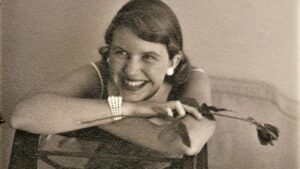
Sylvia Plath was an American poet born in 1932 who, after several breakdowns, committed suicide the 11th of February 1963 putting her head inside the oven of her kitchen. She wrote many letters to different people relevant for her. The most important ones are those written to her psychologist, the doctor Beuscher, who lived in The United States, while the poet lived in London. These letters show how the poet felt when her husband started having an affair with Assia Wevill and abandoned her and their children, making her feel so depressed that nothing made her happy. She began obsessing so much with her situation to the point that her life was a tremendous hole from which she couldn’t get out. The last letter publicly known is the one written just a week before she committed suicide. For this reason, it has never been considered as a suicide note nor as a case for Forensic Linguistics. Nevertheless, if it is compared to other genuine suicide notes, like the ones written by Kurt Cobain or Virginia Woolf, it can be said that the three share some aspects in common to be considered a suicide letter.
From a linguistic perspective, the letter shows a larger length than genuine suicide notes tend to , since they tend to be short letters stating how the person feels and why their final resolution is their death. These notes should have a median of 78 words (Gottschalk & Glesser, 1960). The letter by Plath is a three-page letter. However, lenght is not the only important thing to determine the genuineness of a suicide note. According to Olsson (2017), there are some words that co-occur concerning suicide. These words use to be “cowardice”, “mad(ness)”, “nuts”, and so on. And this is something found in this letter, in which the poet says that she feels “a cowardice & a wanting to give up”. In this study, the author also states that suicide notes are determined by the way the victim express themselves, as they are writing what they cannot express orally. For this reason, we are going to find some ambivalence in their words, because they are living in an insider war.
To determine, if the letter written by Sylvia Plath could be considered a kind of suicide note, it is necessary to compare it with some other genuine suicide notes. This study focuses on the expressions used by Kurt Cobain and Virginia Woolf in their last notes and compares them to the ones used by Plath.
Kurt Cobain (1967 – 1994) was a singer, composer, and leader of the Rock band Nirvana. He belongs to the known as the 27 club, which is an urban legend that musicians, actors, and artists in general, died at the age of 27. Other famous singers like Amy Winehouse, Jimmy Hendrix, Jim Morrison, and Janis Joplin belong to this same club.
The singer killed himself on the 5th of April 1994 shooting his head after several problems with drugs like heroin, and his difficult relationship with his wife. Before killing himself, he wrote his famous letter (Kurt Cobain, 1994) in which he confesses how he has felt during his life and the reasons why he does not want to continue living.
there are some statements in both letters which present the same ideas using different expressions:
- – ‘I haven’t felt the excitement of listening to as well as creating music along with reading and writing for too many years now.’; can be compared to ‘[…] the despair at being 30 & having let myself slide, studied nothing for years, having mastered no body of objective knowledge is on like me a cold, accusing wind.’ ‘Living on my wits, my writing—even partially, is very hard at this time.’
- – ‘I simply love people too much, so much that it makes me feel too fucking sad.’ That is exactly what Sylvia suffered because her tremendous love for Ted had not finished when they got divorced, and she also expressed that in that letter: ‘[…] I have been guilty of what he calls ‘Idolatrous love’, that I lost myself in Ted instead of finding myself.’; ‘[…] what good friends we could be if I could manage to grow up too.’
- The last paragraph of the letter says, ‘I don’t have the passion anymore.’ Which can have a similar meaning as one of the sentences that Plath says in her last paragraph, too: ‘I’m incapable of being myself & loving myself.’ in terms that both sentences lack feelings: if you are incapable of being yourself, you are incapable of having any passion.
Virginia Woolf (1882 – 1941) was an essayist, play, and novel writer who committed suicide by drowning herself in the River Ouse filling her pockets with stones. She suffered depression after her stepbrother sexually abused her, and the death of her mother and stepsister. She attempted on her life several times, one in 1904, then in 1913, and finally in 1941 (Inma Rodríguez, 2021). Before doing so, she left two letters addressed to her husband, Leonard Woolf, and her sister, Vanessa Bell. The note to be analyzed and compared to the one by Plath will be the suicide note written to Leonard Woolf.
Some excerpts of the letter written by Woolf and the letter written by Plath are the following:
- – ‘Dearest, I feel certain that I am going mad again. I feel we can’t go through another of those terrible times.’ is comparable to, ‘What appals me is the return of my madness, my paralysis, my fear & vision of the worst.’ ‘I feel written on the edge of my madness.’ Both writers call ‘madness’ to their depression. Neither of them feels capable to resist it one more time, but none of them says explicitly what their purpose is about it.
- – ‘I can’t concentrate.’ This is a very short sentence, but it has a coincidence with the letter of Plath, ‘Living on my wits, my writing—even partially, is very hard at this time.’ Sylvia found it difficult to write is because it was difficult for her to get concentrated. Both writers felt the same when they talked about their depression.
- – Another sentence similar to the last one is the following, ‘I can’t read.’ and there is also another coincidence found in the Letter of Plath, ‘If I could study, read, enjoy people on my own.’ They are again driven to the same idea: the impossibility of going on because of the return of the depression episodes.
- ‘So I am doing what seems the best thing to do.’ Here, the author does not explicitly say that ‘the best thing to do’ is to commit suicide, but it clearly is. On the other hand, in the letter of Sylvia, although it is not a suicide note, she mentions death as a solution: ‘let me just die & be done with it.’ Again, this quote suggests that the suicide was a real solution for Sylvia a week before she carried out the suicide.
In conclusion, it can be said that Sylvia Plath was writing an indirect suicide note when writing to her psychologist and what she did on the 11th of February 1963 was not a quick decision, but a possible solution to the problems that she had been premeditating a long time before she committed suicide, and thus, she was not killed or induced by anybody to attempt to her but herself.
- Jaafar, E. A., & Jaafar, E. A. (2022). “Studies on Linguistic Stylistic Analysis of Suicide Notes and Suicidal Thought Posts.” International Journal of Research in Social Sciences and Humanities, 12(01). https://doi.org/10.37648/ijrssh.v12i01.006
- Olsson, J. (2012). Wordcrime: Solving Crime Through Forensic Linguistics (Reprint ed.). Continuum.
- Plath, S (2018b). The Letters of Sylvia Plath Volume 2: 1956-1963 (illustrated ed.). Harper & Row Pub.
- Kurt Cobain’s letter https://historydaily.org/kurt-cobains-handwritten-suicide-note-1994
- Virginia Woolf’s letter https://www.wikidata.org/wiki/Q27316214