• Skip to primary navigation
  • Skip to main content
  • Skip to primary sidebar

CORPUS DELICTI

A Corpus of Forensic Linguistics Cases

A Corpus of Forensic Linguistics Cases – Compiled by TFG STUDENTS AT THE ENGLISH DEPARTMENT UGR

  • Home
  • About
  • The Team
  • Cases
    • Helena Jubany
    • Jack the Ripper
    • Unabomber
    • Virginia Woolf’s Suicide Letters
  • Categories
    • Authorship attribution
      • Suicide Letters
    • Language crimes
  • News
  • Events
  • Resources
    • Centers
    • Journals
    • Lectures
  • Share a Case
  • Políticas de Privacidad
You are here: Home / Archives for Cases

The Amerithrax Operation

30 June, 2022 por corpusdelicti Leave a Comment


BREAKING NEWS: TERRORIST ATTACK 🚨

09-11–01 

THIS IS NEXT 

TAKE PENACILIN NOW 

DEATH TO AMERICA 

DEATH TO ISRAEL 

ALLAH IS GREAT 


09-11-01 

YOU CAN NOT STOP US 

WE HAVE THIS ANTHRAX 

YOU DIE NOW. 

ARE YOU AFRAID? 

DEATH TO AMERICA 

DEATH TO ISRAEL 

ALLAH IS GREAT 


These were the letters that Tom Brokaw, Tom Daschle, Patrick Leathy and the New York Post received almost a month after the terrorist attack against the Twin Tower, perpetuated by Al-Qaeda group. These letters were infected with anthrax, a biological agent able to kill all beings in a quick and silent way. Although the main victims were not infected, twenty-three people was, and just five of them died due to pulmonary anthrax.

The letters were anonymous, so it was necessary to do a linguistic analysis for a later profile in order to identify the author behind the messages. The FBI and James R. Fitzgerald were the heads of this analysis. So, the most remarkable features were:

  • The use of ”can not”
  • Use of punctuation in one letter and the non-use of it in the other one.
  • Ts and As highlighted: relationship with the three aminoacids of DNA.
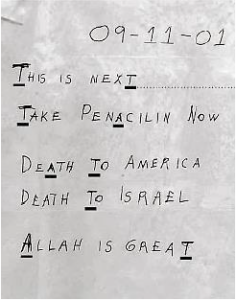
  • Chronological change of R indicating unfamiliarity with this alphabet.
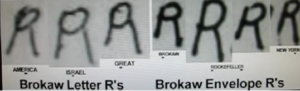
After the analysis the linguistic profile looked as follows:

As the letters were infected with anthrax, it had to be someone working with anthrax in that time. All the scientists working with it were male so the author had to be an adult male. In addition, the fact that he decided to send letters points that he was someone who cannot confront people face to face. The fact that he knew about the three aminoacids of DNA determines that he was someone related to medicina or science, so he had to be a doctor or scientist.

The FBI decided to focus on the anthrax and the people working with it, leaving aside the linguistic features of the letters.  So, the main suspect was Dr. Bruce E. Ivins. At that time, he was a recognized doctor working in the anthrax vaccine. Also, he had mental health problems like paranoid, anxiety and depression, said by himself to his colleagues via email. In these emails, there was a determining message in which he talks about Al-Qaeda and anthrax days before the letters were discovered.

“I just heard tonight that the Bin Laden terrorist for sure have anthrax and sarin gas’’ and ‘’Osama Bin Laden has just decreed death to all Jews”.  Bruce E. Ivins. 

Unfortunately, when the FBI presented charges against the doctor, he committed suicide so they decided to classify the case as there were not enough evidence to investigate another person. Nowadays, we do not even know if Dr. Bruce E. Ivins was the actual author of the letters or if there was another person or group behind them.

If this brief description of the case has awakened any interest in you, you can find more information watching the following TV serie: The Hot Zone: Anthrax. Also, there are some interesting videos about the linguistic analysis of the letters such as Anthrax letters handwriting analysis by Ed Lake.
Filed Under: Anonymous messages, Authorship attribution, Cases

Hummert case

28 June, 2022 por corpusdelicti Leave a Comment

ANALYSIS OF THE HUMMERT CASE

I’m going to explain in detail all the events of Charlene’s murder, the proofs that the police and the linguists found so that Brian Hummert was accused of being the killer of his wife, her children’s testimony, etc.

As it appears in the news by Miranda Knox, the victim, Charlene Hummert, “was a 48-year-old mother of three who had been married to her husband Brian for more than 20 years, was killed. She worked as an administrative assistant for the Commonwealth of Pennsylvania. Her son, David Hummert, portrays her as a good mother, a caring and helpful woman with strong religious values in the forensic file episode”. (Knox M., 2019).

Then, we see that “Brian discovers an envelope on the windshield of his car in 2001, and inside they discover something surprising”. And also that “within the mail is a professional beauty shot of Charlene, similar to one she would have paid to have taken and shared, as well as a concerning note referring to Charlene as a “slut” and threatening with punishment”, (Knox M., 2019), which can be found here:

Here is the proof that your wife is a slut. Do what you will with it. Sorry it took so long. I only come occasionally back to the area on business. Merry Xmas. I will send you several copies of this so you get the information in case the slut intercepts one. Before I tell you how I got it, I want to tell you a little about myself. I played in a band back in the late seventies/early eighties. I had a one niter with your wife. She was a fine piece of ass that I enjoyed several times that night. Rumor had it that she occasionally took several guys at once and she sucked cock really well. I would have loved to have found out. A couple of days later she made sure my fiancée found out. She dumped me and then had an abortion. We have since patched things up and gotten married, but she can’t have any children. I blame your wife for that. The time is now right for payback. I hope to see your wife miserable the next time I am in the area. I ran into your wife back in September at Gabriel Brothers. I almost didn’t recognize her with her dyed hair. I have been following her around hoping she would mess up. On October 6, I followed your wife over to Capitol City Mall. She was dressed up more the usual for a Saturday of shopping. She went into the Picture People. This was around 10 AM. A couple of weeks later I went in and got copies of the pictures enclosed. On the negative holder she had written that the photo was a gift. There was no indication of which one she had printed up. I ask you who was it for? Also she does not have her wedding ring on. Why not? A red rose is a symbol of love. For who? I don’t think you know about these. Do you? Also she has purchased a lot of sexy bras and panties. Have you seen them or the red nightie? Were they brought for your enjoyment? You may also want to ask her about her Spencer Gift purchases. Do you love lubes with her? So you see once a slut always a slut. (Taken from: Forensic Miles, 2020).

“Charlene was taken aback because she said she had never had an affair and had no idea who had sent it. The letter was sent to the police, and the house was placed under surveillance, but it did not help. More letters were delivered. The family was understandably worried and always on edge. They thought they saw people on their property a couple occasions, according to David, but nothing happened”. (Knox M., 2019).

The police started investigating the letters, but found no fingerprints or evidence. They were confused. Until the next letter came. This letter was surprising since it stated:

“Hey dumbass, I know about the camera. Your kids’ friends have big mouths. I know someone’s house code is 7805. This is the third packet”. (Taken from Forensic Miles, 2020).

“At this time, she would be completely freaked out at this point, and I’m not sure she would be able to stay in the house. However, with three children, moving her family would have been extremely difficult. The marriage began to have troubles as a result of the stress and continual state of high alert, and disagreements became more common”. (Knox M., 2019).

One of these fights happened on the night of March 19th. “Charlene called after the fight finished, and her husband stated she left with the individual she had contacted about midnight. Her children were not at home that night, but they sensed something was wrong. David claimed he attempted to contact her several times but he was unsuccessful”. (Knox M., 2019).

Brian reported his wife missing later that night, and the police department put out an all-points bulletin for Charlene’s white Land Rover SUV. “It didn’t take them long to locate it. The automobile was discovered in a supermarket parking lot on March 20th. Charlene’s body was discovered lying under a blanket in the rear of the automobile”. “She died as a result of ligature strangulation. She had a distinctive mark on her neck, which authorities were unable to identify at the time”. (Knox M., 2019).

Charlene was chocked and strangled from behind, according to police, and there was nothing she could do. “They did assume, however, that it was someone she knew because he was able to approach so near”. (Knox M., 2019).

The family thought that they knew who was responsible, the person who had been sending her letters.

“The forensic pathologist discovered something fascinating during the autopsy: evidence that the murder scene had been manufactured. He discovered two key clues: first, Charlene’s pants were on backwards, implying that someone had put them on after she died. The second reason was that she was wet; nothing else in the car was wet, except her jacket. That is, she had gotten wet before getting in the automobile. He discovered a drag mark on her lower back with dirt and gravel lodged in it, but no proof that she was alive at the time”. (Knox M., 2019). Although forensic tests revealed nothing unusual in the mud and gravel, authorities did discover another clue.

Employees at the grocery shop mentioned seeing the SUV parked there early in the morning, and the investigators had an idea: “what if the driver of the automobile went into the grocery store to make it appear less obvious that they were up to something? They collected camera footage of the store and discovered a suspicious person”. (Knox M., 2019).

The images that they found were: “A man that appeared to be trying to get away from the cameras. He was dressed in crimson gloves, a parka, and a wool hat. And he just bought one thing. Biscuits for dogs. Now that we have dogs, we have to get up early on occasion to make emergency dog purchases, but I would never get up at dawn to buy dog biscuits! Unfortunately, due to the poor quality of the tape, they were unable to identify the man. They chose to send the image to a photo grammetrist, who converts a two-dimensional snapshot into a three-dimensional image”. (Knox M., 2019).

The grocery store sent the lengths of their floor tiles, “after which they snapped an image using the same camera and used a height chart to determine the mystery man’s height, which was 5 ft 5 inches”. (Knox M., 2019).

They weren’t going to give up on the dirt samples, though; “they were convinced it would reveal the murderer’s identity. So they sent it to a forensic microscopist to see if he could uncover anything that the forensic scientists couldn’t, which he did”. (Knox M., 2019). “The microscopist was able to extract evidence that was matched to soil found near Charlene’s home and elsewhere using a tuning fork, similar to the one used to tune instruments, and he found a match. The dirt was identical to that in the Hummerts’ yard. It was “a perfect match,” he said, and one of the best matches of his career”. (Knox M., 2019).

They now knew Charlene had been carried over her own driveway and put in her own car after being killed on or near her own driveway. Then, “the family home was searched after police obtained a search warrant. What they discovered did not disappoint them. They saw investigators found a piece of cable on the floor that the Hummert family had used as a dog leash. A metal piece connected to the cable matched the clear scar on Charlene’s neck perfectly. They came to the conclusion that Charlene was killed with a “dog leash” or something similar”. (Knox M., 2019).

Brian’s statements about his wife’s murder changed after this finding. He claimed that his son, David, was the murderer of Charlene, and he called his lawyers to do so.

“But the investigators weren’t stupid; they recognized that this accusation was false; in fact, one of the judges called the allegation “preposterous.” They realized this couldn’t be the case because of Charlene’s close relationship with all three children, but especially David”. (Knox M., 2019).

Her marriage to Brian, on the other hand, was not as happy. Charlene was preparing to divorce her husband. “This was not the first time she had done this, alleging Brian had abused the children”. (Knox M., 2019).

Then, out of nowhere, another letter arrives, claiming responsibility and addressed to the police department. It claimed responsibility for Charlene’s murder and stated that her husband was not involved:

I killed Charlene Hummert, not her husband. We had an affair for the past nine months. She wanted to break it off. So I broke her neck! I wrote letters to her husband and to Det. Loper. I used a white nylon rope to kill her they won’t find me I am leaving. I am writing because of Easter. I am sorry I killed her. They won’t find the cell phone she used to call me, it is in the river and not under my name. I carried her into the kitchen and then dragged her outside to her car. This is the fifth woman I killed. I am getting good at it. Cops have no idea how easy it is to pin husband when they only look there. She knew about pictures on PC. She told story to set up husband for the Divorce. Ha Ha ByeBye for now John. (Taken from: Forensic Miles, 2020).

The police agreed to send the letters to forensic linguist Dr. Robert Leonard, “who was a founder member of the rock band Sha Na Na. He stated his first experience with forensic linguistics was reading the contracts for this band, and that they often said one thing but meant something else”. (Knox M., 2019).

When Dr. Leonard compared the stalker letters to the letter that came at the police station, he discovered a clue, “a unique rhetorical indication in both letters: An Ironic Repetition, which is when the same verb is used in two consecutive sentences but the context is changed. According to Dr. Leonard, the letters were written by the same person”. (Knox M., 2019).

Dr. Leonard then examined writing samples identified as Brians and discovered something else: “negative contractions but no positive contractions. Many individuals use both, but Brian Hummert is the only person Dr. Leonard has ever encountered who only uses negative contractions”. (Knox M., 2019).

In addition, “Brian was also found with a blue parka and a receipt for dog treats in his residence, matching the height of the unknown male in the grocery store. Brian had written the letters on his computer, according to the evidence”. (Knox M., 2019).

The investigations took seven months before the arrest was made. “Brian was caught at his workplace and charged with criminal homicide, obstruction of justice, tampering with or falsifying physical evidence, and making false police reports”. (Knox M., 2019). Brian Hummert was apprehended and charged.

As we can see in the article by M. Knox: “Prosecutors said Brian saw his marriage deteriorating and hoped that by writing these letters to frighten his wife, he could become the hero and re-connect with her. The letters, on the other hand, just provoked conflicts, and authorities believe Charlene was aware that he was writing them. Brian snapped after an altercation, grabbed the nearest item he could find, strangled Charlene, clothed her, and left her car and body at the supermarket”. (Knox M., 2019).

After the investigation was finished, “Brian was given a life sentence without the chance of parole after being convicted of first-degree murder. David had never imagined that his father would do such a thing, but his opinion was quickly changed”. (Knox M., 2019).

David finally spoke up about his father on an episode of I Lived with a Killer in 2019.

Brian may have appeared to be a good father from the outside, but the truth was far from that. “Charlene was saving money to escape with her children at the time of her murder, according to David’s father, who was violent. David claimed that his father once fractured his nose by throwing a bike frame in his face”. (Knox M., 2019).

The following is a quote from The Sun: “But on the evening of March 19, 2004, David, then 18, and his teenage sister Tracey went out, leaving Brian and Charlene alone in the house David says: “I was out until approximately 4 am. When I came back my dad was up sitting in his computer room with all the lights off. “I asked him why he was still up and he said that he and my mother had got into a fight and she left and he was waiting for her to come home so they could talk about it. “I was pretty tired and just wanted to go to bed and figured if it was anything super serious, she would have called me or texted me or something.” But the following morning when Charlene still hadn’t returned home, David began to panic. David says: “It just did not feel right.”

(Taken from: Forensic Miles, 2020).

When his father stopped cooperating with the authorities, David sensed something was happening. As he claimed, “Brian began acting differently, he said, treating him well and offering to assist him if he needed anything – this wasn’t right”. (Knox M., 2019).

One of the most interesting aspects of the trial is that David’s sister sided with her father. “She refused to cooperate with the police, and while on the stand, she claimed that David was the murderer”. (Knox M., 2019).

The murder effectively ended the family, and David claims that he hasn’t spoken to either his sister or brother since the trial, which is a tragedy. These crimes also have too many consequences apart from both the victim and the murderer.

And then, I will provide details about Charlene’s murderer, Brian Hummert.

As I previously commented, he was Charlene’s husband, they had three children, one of them is David Hummert, who said that his father killed his mother. Brian and Charlene weren’t passing through a very good part of their relationship as a marriage, they didn’t understand each other and had a lot of confrontations and were going to divorce. Because of that Brian Hummert wanted to kill her wife, and tried not to be discovered by writing some letters that supposedly came from a stalker that was following her wife for a long time and from a serial killer that said that had killed 5 women including Charlene. He was very intelligent, because he tried to simulate two different ways of writing for not being discovered, the one of the stalker, and the one of the serial killer, obviously he tried that both were different from the way he writes daily on his e-mails, so that demonstrates that Brian had all planed, and a very cold mind to make a perfect plan for committing the murder. This means that the writer of the letters (Brian) had an extended knowledge of the language, it wasn’t someone without studies, it was someone that knew what he was doing and that had everything perfectly planned.

The police, and more concretely the linguists, had to analyse those letters and search details about the supposed author or authors of them. Luckily, the police had access to Brian’s computer and could compare how those letters were written with Brian’s way of writing in those e-mails. The letters by the stalker were very direct and menacing, telling all the events in detail and accusing her of having an affair with the supposed stalker. They were directed to Brian saying everything about the affair that Charlene and the stalker had, and the objective of Brian writing those letters was that the police thought that he wasn’t related to his wife’s murder and that the supposedly stalker was her killer or had very high possibilities of being the assassin.

There was also a letter that mysteriously was written by a serial killer and that said that he was guilty of Charlene’s murder and that Brian wasn’t related to her assassination. The serial killer in the letter also states that he had killed five women including Charlene. In this letter, the murderer confirms that he killer Mrs. Hummert and gives a detailed explanation of how the events happened and how he killed her.

Finally, as I said before, the linguists compare the letters by the stalker and the serial killers with some e-mails that they found on Brian Hummert’s computer, and discover some similarities between them that are the proof that the serial killer and the stalker didn’t exist, and those letters were written by Brian Hummert himself trying to write as if he was another person.


REFERENCES

-Forensic Miles, 2020, “The Murder of Charlene Hummert.” Forensic Myles LLC, The Sun. https://www.forensicmyles.com/blogs/forensic-myles/the.

-Knox, M. 2019, “My Dad Strangled My Mum to Death with a Dog Collar – but My Sister Stood up for Him in Court.” The Sun, 21 Aug. 2019, https://www.thesun.co.uk/news/9736478/i-lived-with-a-killer-dad-stalked-strangled-mum-to-death-brian-hummert/.

-Arias, J. 2013, “Charlene Hummert, died at the hands of her husband: notorious murders” jarias@pennlive.com, Jeremy Arias |. “Charlene Hummert, Died at the Hands of Her Husband: Notorious Murders.” Pennlive, 28 May 2013, https://www.pennlive.com/midstate/2013/05/notorious_murder_charlene_humm.html.

-Miller, M. 2013, “Court backs Brian Hummert’s conviction for wife’s 2004 murder in Fairview Township”, mmiller@pennlive.com, Matt Miller |. “Pa. Court Backs Brian Hummert’s Conviction for Wife’s 2004 Murder in Fairview Township.” Pennlive, 15 Oct. 2013, https://www.pennlive.com/midstate/2013/10/pa_court_backs_brian_hummerts.html.

– Samuel, N. 2012, “Reading Between the Lines: Dr. Rob Leonard’s Forensic Linguistics Program is Attracting Students to a Fast-Growing and Intriguing Legal Field”, PROFILES2012 – Hofstra University. https://www.hofstra.edu/pdf/academics/ce/professionaldevelopment/forensicstudies/ce_leonard_profile2012.pdf.

Filed Under: Authorship attribution, Cases Tagged With: Brian Hummert, Charlene Hummert, Dr. Leonard

Sandra Weddell’s Case

23 June, 2022 por corpusdelicti 1 Comment

Hi everyone!

I’m going to write about the case of Sandra Weddell, which, to me, was really interesting to investigate. 

Sandra Weddell was a 44-year-old nurse from Bedforshire, England. She was a kind and very religious woman. She was married to the police inspector Garry Weddell. Garry was a respected inspector who had been more than 25 years in the force. They had three children together, and they appeared to be a happy family (Wright, 2008).

One day everything changed when, apparently, she committed suicide and left a letter for her husband that said:

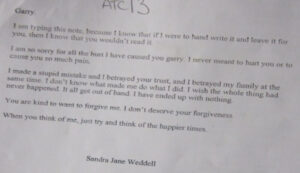
“Garry. 

I am typing this note, because I know that if I were to hand write it and leave it for you, then I know that you wouldn’t read it. 

I am so sorry for all the hurt I have caused you garry. I never meant to hurt you or to cause you so much pain. 

I made a stupid mistake and I betrayed your trust, and I betrayed my family at the same time. I don’t know what made me do what I did. I wish the whole thing had never happened. It all got out of hand. I have ended up with nothing. 

You are kind to want to forgive me. I don’t deserve your forgiveness. 

When you think of me, just try and think of the happier times. 

Sandra Jane Weddell”

Do you see anything out of context when you read this letter? At first, everything seems normal. But thank’s to the linguist John Olsson, it was known that Sandra was not the one who really wrote this letter. 

In 2006, Garry discovered that Sandra was having an affair and she wanted to divorce. Garry’s life fell apart, and he was really worried about losing his children, so he thought that the solution was committing the ‘perfect murder’ (Leafe, 2009).

In January 2007, Garry killed Sandra putting a cable tie around her neck, that is, strangling her. Later, he hung her body in the garage of their house, trying to make it look as if she had committed suicide. In addition, he tried to cover what he had done leaving a ‘suicide note’ nearby in a sheet of paper, as if Sandra had written it (Wright, 2008). 

As he was a police inspector, he knew about all the possible mistakes he could make and he tried to cover everything that could make him look guilty. He even wore gloves to make sure he was not leaving evidence on the paper (Wright, 2008). 

During the investigation, the police asked some neighbours and colleagues about the couple’s behaviour the day of the murder. Although at work Sandra was acting perfectly normal according to her colleages, that day there were some inconsistencies such as the fact that neither she nor her husband had picked the children up from school. Also, Garry asked his neighbour for help to find Sandra who,  according to him, had been missing for 24 hours (Wright, 2008). 

At first, police investigations pointed that it had been ‘probably suicide’ and Garry Weddell was not arrested. Some detectives disagreed with this and continued their investigation without him knowing. Some months later, Garry was suspended from his job and arrested as a suspect of murdering his wife.  However, after trial, he was free on bail and killed his mother-in-law before killing himself. 

As I previously said, John Olsson was the linguist who analyzed the letter and found three main relevant features in this letter that were odd:

  1. The full stop after the salutation.
  2. How she signed the letter with her full name and didn’t write only ‘Sandra’ but also the second name and surname. Also, it is centered and not left-sided.
  3. The use of very short sentences comparing to the other samples analyzed wrote by Sandra in which she used longer sentences. 

His testimony about this case was: at first he couldn’t believe that a police inspector could have killed his wife and at first he though there wasno linguistic value in the letter that could be admitted in court. (Olsson, 2020, “Garry Weddell’s case”)

He used the following technique: memorizing the letter with punctuation and line breaks and transcribing the letter over and over again until something emerges. Then he compared the features found in the alleged suicide note with Sandra’s previous written texts, and then with Garry’s. (Olsson, 2020, “Garry Weddell’s case”)

If we focus on the vocabulary there is not really anything relevant to point out. We should mainly focus on the structure of the sentences and the use of punctuation.  It is proved that Garry uses full stop after opening salutation, really short sentences and centered closing salutation.

Also, we can find some spelling mistakes and wrong use of the punctuation signs. This proves that he tried to write Sandra’s suicide note perfectly. However, he was not successful. All these characteristics pointed to an only suspect, Sandra’s husband. 

The end of this case was really tragic as Garry was arrested but he was immediately released and he killed his mother-in-law and took his own life. Also, investigations proved that he was planning to kill more people. 


References:

Leafe, D. (2009, Jul 3). “Dear Garry. I’ve decided to end it all”: How a full stop trapped a killer. Mail Online. https://www.dailymail.co.uk/news/article-1197187/Dear-Garry-Ive-decided-end-The-stop-trapped-killer.html 

Olsson, J. (2003). Fakers and Forgers. Forensic Linguistics Institute. Forensic Linguistics First Certificate Course.  https://www.thetext.co.uk/docs/course/Unit-2-FL-Course.pdf 

Olsson, J. (2009). Wordcrime – Solving Crime Through Forensic Linguistics. Continuum International Publishing Group. pp 115-122.

Olsson, J. (2020). Garry Weddell’s Case. Retrieved from https://www.youtube.com/watch?v=dSrJgE9hdFw

Filed Under: Authorship attribution, Cases Tagged With: Authorship attribution, Sandra Weddell

The Zodiac Killer

5 June, 2022 por corpusdelicti Leave a Comment


Hello all!

This is the Zodiac speaking. I hope that everyone is having fun in trying to catch me, but… I am sorry for the spoiler: you will never do so.

Let me introduce myself. I am an anonymous serial killer under the pseudonym of Zodiac, and I want to share with you my story.

Between the 60s and 70s I killed 37 people in Northern California. Yes, 37, you read well, in fact, I confessed so in one of my famous letters. I sent those letters in addition to some coded into cyphers ones to three different local newspapers: Vallejo Times Herald, San Francisco Chronicle and San Francisco Examiner.

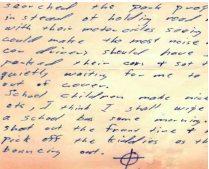
Here you have one of my letters.
Mailed: July 31, 1969
Postmarked: San Francisco, Calif.
Sent to: San Francisco Chronicle

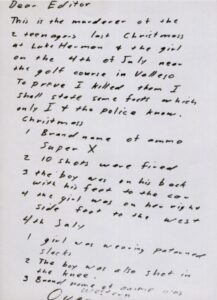
As you can see, I have always been honest. Not only did I prove that I had actually murdered those people, but I also left clues about my identity and I warned about the next attacks I had in mind to commit. Despite having provided all this information, the police was never able to catch me. And this is where the role of the linguist comes into play. Forensic linguists have also tried to find out who I am, or at least, to provide as accurate a description of my personality as possible. For instance, Gerald McMenamin provided a very interesting linguistic analysis of my handwriting and my words:

Not only him, but many other forensic linguists have tried to reach a conclusion. Unfortunately, all they managed to do was to get a little closer to my identity. However, I have to be honest I admire the fact that they have been able to create my linguistic profile. Different experts conclude that I am a middle-aged man with intellectual abilities which exceed the average. They state that I am quite a cultured person and that I am sophisticated and careful in the way I plan my murders and write about them. I guess that they are right, nobody knows who I am… It has also been concluded that I am trying to challenge you citizens and security forces, and that I am narcissist and manipulative, can you believe that? Well, I will never reveal it to you…

Watch this:

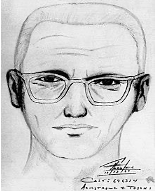
This is my facial composite. Those few people who survived my attacks remembered my face… these descriptions allowed the police to create it.

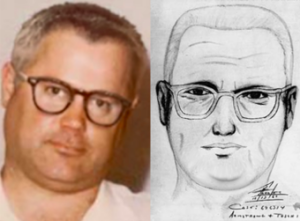
My facial composite along with my handwriting matched that of a man called Arthur Leigh Allen:

Allen was the prime suspect of this case, in fact, he did not have an impeccable past, as he was a teacher who bullied his students. Despite these matches, the police concluded that he couldn’t be the Zodiac because his DNA was not the one found in those multiple crime scenes.

Last but not least…

MISSPELLED: doo, buton, mistry, som.

SPELLED: do, button, mystery, some.

As I am a challenging person I produced in many of my letters an alternation of spelled and misspelled words. For example, I wrote the word ”do” and a few lines below, I wrote ”doo”; and so did I with the rest of the words that you can see in the table. Some linguists such as McMenamin and Labov state that, intentionally or not, I select the language forms that I am going to use.

Another thing that I want to tell you is that my calligraphy is characterized by being extreme right, and this reveals something about my personality: graphology identifies me as: lack of self-control, impulsive, unrestrained, intense, very expressive, low frustration tolerance:

If you are a curious person and you want to read all my letters, here you have a website, which not only contains my letters, but the envelopes and cyphers: http://www.zodiackiller.com/Letters.html

You can also watch David Fincher’s film: Zodiac (2007) , or Alexander Bulkley’s film: The Zodiac (2005).

And with all this… I think it is time to stop revealing things that concern me, lest you discover my identity… even though the FBI hasn’t been able to find me… can you? I don’t think so, however, good luck.

Zodiac.


Filed Under: Authorship attribution, Cases

Jack the Ripper’s letters

25 June, 2021 por corpusdelicti Leave a Comment

DESCRIPTION OF CASE

From 1888 until 1891, eleven crimes were committed in Whitechapel, London, and six of them were considered to have many similarities that could be linked to the same killer. (Keppel, Weis, Brown, & Welch, 2005, p. 1).

All crimes supposedly committed by Jack consisted on killing white and poor women and most of them were prostitutes. His victims were the following: Emma Elizabeth Smith, Martha Tabram, Mary Ann Nichols, Annie Chapman, Elizabeth Stride, Catherine Eddowes, Mary Jane Kelly, Rose Mylett, Alice Mckenzie, Frances Coles and another body was found but the identity is unknown (Keppel, Weis, Brown & Welch, 2005, p. 3). What characterized those crimes was that they were committed in a very similar way by stabbing or strangling the victims and after analyzing the different murders, the similarities were examined with the aim of finding the killer.

According to Keppel, Weis, Brown and Welch, each killer has his/her modus operandi and signature characteristics. The first one refers to the “steps” or “rules” that the killer follows in order to carry out the crime. Signature characteristics are those behaviors that make the killer a unique figure with his/her own style when committing crimes. Now, taking into account the modus operandi, it was known that Jack killed his victims by stabbing them with a knife, strangling and cutting off parts of their bodies. Another point to highlight is the fact that these crimes were always committed between midnight and early morning, in nearby places and the victims were white and poor prostitutes as it has been mentioned before. Regarding signature characteristics, it is shown a kind of pattern followed by the killer such as the process of moving from stabbing to mutilating. It is also necessary to point out the fact that he shows superiority in the way in which he killed his victims because they seemed to be submissive. (Keppel, Weis, Brown, & Welch, 2005, p. 14-16).

DOCUMENTS EXAMINED IN THE CASES AND LINGUISTICS INVOLVED

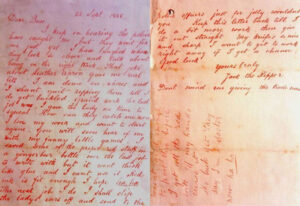
DEAR BOSS LETTER:

This letter has two pages and it was written in red ink (which could refer to the blood of Jack’s victims) and it dated from 25 September 1888 (Whitechapel Jack, 2021). At first sight, it looks like an organized letter, with small letters and little separation between each line. Besides, he writes the words in italics which results in a clear organization in combination with the previous characteristics. There are also three underlined words: “right” (maybe in order to emphasize his idea that the police were wrong about their own assumptions), “red” (probably underlined because it refers to the blood of his victim), and “ha ha” (used to make it clear that he was mocking the police). With a brief analysis on the syntactic structure, it can be seen multiple uses of the personal pronoun “I” followed by infinitive verbs or verbs in their past form or some modal verbs. In fact, the author repeats many times “I do” in order to emphasize his next action or idea. Due to the use of these verbs and modal verbs, the structures written by the author are complex, using some coordinated and that- clauses. However, the author commits some grammatical mistakes because it seems like in some clauses there are missing words because the meanings are confusing. Furthermore, some other clauses need commas or dots. And as it is known, the nickname of this killer appears for the first time at the end of this letter.

In another research in which the Uruguayan mathematician Eduardo Cuitiño was involved, the signature taken from the Dear Boss letter was used to compare the letter “p” with that of the surgeon called Stephen Herbert Appelford. Appelford lived in a neighborhood which was close to the place where the crimes were committed and many doctors and surgeons worked in those zones. It was found that the handwriting of Appelford was similar to the “Dear Boss” letter (Cuitiño, 2015, p. 11). The point to highlight was that the surname of the surgeon and “ripper” both have double “p” and these “p” were overlapped in order to see if they coincided and it was the case. (Cuitiño, 2015, p. 15). Moreover, the letter “p” was not the only element analyzed and compared to Jack’s calligraphy in the “Dear Boss” letter, which was the main letter attributed to Jack. In fact, the census chart of the surgeon was also used in order to make comparisons with the handwriting of the “Dear Boss” letter. The first important thing to highlight in both writings is the slant of the letters which seem to be in italics. The slant is noticeable in the way the write the letter “s” because both letters coincide along with their form. Both the surgeon and the killer write the “f” with a long line that goes down and a “t” with the top mark very long to the right. The letter “m” also seems to be written the same by both people because of the first line and the last one and the aperture of it. Although some more letters are similar, it is also important to point out that both write the point of the “i” as if they were accents because of the upward line they draw.

Despite the similarities in the two writings, Appelford was just one more suspect of all surgeons or doctors who were related to Jack considering that the murderer could be a doctor or simply have knowledge of it.

SAUCY JACKY POSTCARD:

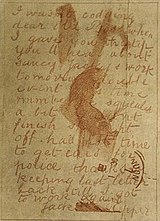
A few days later the “Saucy Jacky” postcard was sent to the police, dating from 1 October 1888 (Whitechapel Jack, 2021). The content of the postcard focuses on what was understood as the “double event” because the night before receiving the postcard, Jack killed two of his victims, Elizabeth and Catherine. If this postcard is compared to the previous one as Andrea Nini did, the words written by the author are bigger than the other words of the previous letter and some letters like the “y” are not the same. Besides, the postcard is not as well organized and clean as the “Dear Boss” letter. In fact, the clauses are too long and some commas are needed as well. There is little separation between lines but these are not straight. As the previous letter, the postcard is also signed at the end by Jack the Ripper.

Despite the similarities found in the written documents, the author or authors are still unknown.

FROM HELL LETTER:

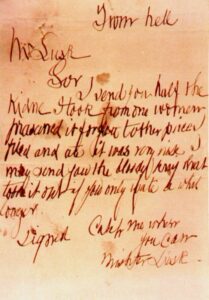
The next important letter dated from October 16th 1888 and was addressed to Mr Lusk (who was the president of the Mile End Vigilance Committee) (Whitechapel Jack, 2021). This letter was in a box and accompanied by a kidney which it was thought that was from his victim Catherine Eddowes (Whitechapel Jack, 2021). Again, the killer seemed to be mocking the police because it is also said that maybe he was going to send Lusk the knife used to kill the victim. This letter is not as well organized as the first important letter when his name appeared for the first time.  In this writing, it is noticeable that the killer keeps leaving little separation between lines and words are long and they are written in italics. Although the letter is short, there still are some grammatical mistakes like in “kidne” instead of “kidney” and then the word “knif” is also wrong written, instead of writing “knife”. There is also another mistake in “prasarved” instead of “preserved” and also it is written “wate” instead of “wait” and “whil” instead of “while”. There is another mistake at the end of the letter because the author writes “mishter” instead of “mister”. Furthermore, there isn’t any signature at the end, there is just the word “signed”. It is also necessary to add that the letter is composed by only two long subordinated clauses.

In order to make a better analysis of the letter, the criminologist Juan Francisco Alcaráz made his own research on this writing. He states that the aim of the letter was to challenge the police and the people of Whitechapel since no one could guess who was behind the murders. Moreover, Juan Alcaráz describes the type of text as informative but also as prescriptive (which could be considered as expositive text too) (Alcaráz, 2012, p. 48). In order to catch the attention of the readers, he uses his idea of the kidney and that he ate half of it. If the degree of information is taken into account as the criminologist did, the author contributes new information because he talks about something that he did to his victim.  Also, the letter could be said to share the context of the others two letter and postcard since the three writings talk about crimes committed by the same author. In brief, the author has good calligraphy but some words are unstable and its ideas seems to be disorganized along with the grammatical mistakes that were not committed on purpose (Alcaráz, 2012, p. 52-53).

OPENSHAW LETTER:

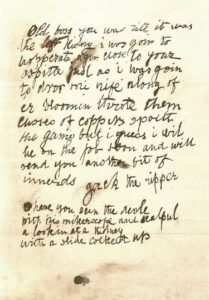
The next letter related to Jack was the “Openshaw” letter which was sent to Dr. Openshaw (who was the doctor in charge of examining the kidney sent with the “From Hell” letter) on 29th October 1888. (Jones, 2021). From the content it is obvious that the letter is addressed to the doctor since the author is referring to the kidney of the previous letter. At first sight, the letter has two complex clauses but they are not separated by dots or commas and it is signed by the supposed Jack in the middle. The organization of the writing is messy and in some parts the ink has been moved, the separation between words is not very big and other words are crooked. If it is compared to the “From Hell” letter some grammatical mistakes can be seen such as the use of “kidny” instead of “kidney” (the author writes wrong the word “kidney” once and right the other time he uses it). Other letters are missing in words like “wil” instead of “will” or “agin” instead of “again”. There is another grammatical mistake in the word “operate” which has been written “hoperate” or the word “knife” which has been written “nife”. Regarding calligraphy when comparing it with the previous letter, it can be seen that the style of writing of the authors is not the same. In fact, this letter seems to have been written by a little kid because of the proper organization of the writing and the messy words.

The novelist Patricia Cornwell carried out her own investigation and she thought that the author of the letters or the proper Jack the Ripper could be Walker Sicker (Ryder, 2021). She made DNA tests on alleged letters written by Jack but the results were inconclusive.

NINI’S ANALYSIS:

Another linguist who was involved in the investigation of the letters during the last few years is Dr. Andrea Nini, specialized in forensic linguistics, who decided to carried out his own research about these documents based on comparisons and repetitions. Now, Nini’s analysis will be used to see the importance of this branch of linguistics in the Jack the Ripper’s case and how the considered most important letters attributed to Jack could be related.

The main aim of Nini’s paper is to make a comparison of the mentioned letters taking into account repetitions of some structures used in the writings. By doing this he tries to reach a conclusion as to the authorship attribution and to discover the possible connection between the chosen letters due to the fact that they could be written by the same author.  In his analysis, he does not follow an order when analyzing the letters but he analyses them in pairs or groups. Nini makes use of the Appendix in which Skinner and Evans collected all the written documents that were attributed to Jack the Ripper.

To carry out the analysis, Nini uses the n-grams previously mentioned. More concretely, he focuses on 2-grams (which refers to combinations of two consecutive words within a structure like a sentence used in a written document) to measure the frequency of 2- grams used in the texts attributed to Jack. The idea of using the n-grams is also to detect plagiarism because if these combinations of words are repeated in some texts it would be possible that the authors of the texts were the same.  (Nini, 2018, p. 625).

First, a comparison of the writings “Dear Boss” letter and “Saucy Jacky” postcard is made with some of the sentences used by the author. There are combinations of two words that are used in both writings although they do not have the same syntactic function. The examples used by Nini to explain this are the sentences [ till I do a bit more work] which belongs to the “Dear Boss” letter and another sentence which is [number one squealed a bit] that is taken from the postcard. In both writings the author writes “a bit” but in the first sentence it acts as a noun phrase while in the other sentence it is used as an adverbial phrase. Apart from this, there are also repetitions of other combinations of two words using the same verbs in the same structures, which could be considered as a proof that the author of both writings is the same. Other examples used by Nini are these two sentences [I gave the lady no time to squeal] which is taken from the letter and the other sentence [I gave you the tip] which is from the postcard. It can be seen that the structure used is the same with the repetition of the 2-grams (the subject and the verb). There is another interesting case of 2-grams and 4-grams in which one combination is repeated in the same letter and in the postcard as well. In the “Dear Boss” letter there are three sentences which are repeated: [till I do get buckled], another sentence which is [keep this letter back till I do] which is a combination of 4-grams and the first sentence that has been mentioned before [till I do a bit more work]. In the postcard appears the following sentence [till I got to work again] and another sentence which is [thanks for keeping last letter back till I got to work]. The fact that the structure “till I” is repeated so many times really means that there is a relation between both writings and the author could be the same. Besides, in the same sentences mentioned there is another repetition with the combination of “letter back”, being another proof about the similarities and frequencies of the structures found in the writings (Nini, 2018, p. 629).

It is also important to add that in both letter and postcard there are complex sentences with subordination and infinitive clauses like the ones mentioned above. By this use of the language the author is able to link the ideas well. Besides, Nini points out the following detail: “‘Dear Boss’ and ‘Saucy Jacky’ also share the use of the verb ‘work’ to euphemistically indicate the act of killing” (2018:629), therefore it is another proof of the relation between the letter and the postcard.

With the analysis of these writings, Nini confirms the possible relation between the writings due to the fact that there are many repetitions of structures and frequencies in the letters and postcard. However, Nini considers that the most likely relation is between the “Dear Boss” letter and the “Saucy Jacky” postcard because the “Midian” letter could be just a great copy of the style of the other writings (Nini, 2018, p. 633-634). Although there could be a relation between these letters, the authorship of any of them is not known.

The letters shown in this section are considered the most important of those attributed to Jack the Ripper due to the fact that in the “Dear Boss” letter the name “Jack the Ripper” appears for the first time, in the “Saucy Jacky” postcard the author mentions the “double event”, the “From Hell” letter was in a box with a kidney that could belong to the victim Catherine and the “Openshaw” letter could be related to the “From Hell” letter because it was sent to the Dr. Openshaw, who was in charge of examining the kidney. Moreover, these documents are really the ones that gave useful information to the police, whose contents make sense when they are related to the crimes.

CONCLUSION

Regarding calligraphy, in the analyses of these documents mostly differences could be seen between them, which made it difficult for researchers to find out the author behind those letters. However, Nini found a possible relation between the “Dear Boss” letter and the “Saucy Jacky” postcard due to the fact that they shared many n-grams which are repeated in both documents. Considering that the “Dear Boss” letter was the first letter in which appears the nickname of Jack the Ripper and that the “Saucy Jacky” postcard was also signed with that nickname in order to establish this idea of a possible link between them. Also, the postcard refers to the “double event” which could mean again that the author of the first letter and the postcard could be the same. The other link that I considered that could be possible was between the “From Hell” letter and the “Openshaw” letter mostly because the first one came with a kidney from the victim Catherine and the second one was sent to Dr. Openshaw who was the one analyzing the kidney.

In the case of Jack the Ripper, it should be noted that no linguist was able to find any real author. Even though the analysis of Cuitiño which was based on the idea that the double “p” found in “ripper” in the “Dear Boss” letter and in “Appelford” could be key to discover a possible author of such letter, there was not enough evidence to prove it.

THE LETTERS

(Dear Boss letter)

(Saucy Jacky postcard)

(From Hell letter)

(Openshaw letter)


BIBLIOGRAPHY

– Alcaráz, J. P. (2012). El Asesinato en serie: Los Mensajes Escritos. El Perfilador, 7. Pp. 40-58.

– Cuitiño, E. (2015). La Identidad de Jack el Destripador, Skopein: La Justicia en Manos de la Ciencia, 1, pp. 1-37.

– Jones, R (2021). Dr. Oppenshaw consulted on the kidney, accessed 13 June 2021, <https://www.jack-the-ripper.org/openshaw.htm>

– Keppel, R.D., Weis, J. G, Brown, K. M & Welch, K. (2005). The Jack the Ripper murders: a modus operandi and signature analysis of the 1888–1891 Whitechapel murders, Investigative Psychology and Offender Profiling, 2, pp. 1-21.

– Nini, A. (2018). An authorship analysis of the Jack the Ripper letters, Digital Scholarship in the Humanities, Vol. 33, 3, pp. 621-636.

– Ryder, S. P (2021). Patricia Cornwell and Walter Sickert: A Primer. Casebook: Jack the Ripper, <https://www.casebook.org/dissertations/dst-pamandsickert.html#>

– Whitechapel Jack (2021). The Ripper Letters, accessed 20 May 2021. <https://whitechapeljack.com/the-ripper-letters/>

Filed Under: Jack the Ripper

  • Page 1
  • Page 2
  • Page 3
  • Go to Next Page »

Primary Sidebar

Receive notifications in your e-mail when new posts are published

Categories

  • About (1)
  • Cases (11)
    • Helena Jubany (2)
    • Jack the Ripper (1)
    • Jonbénet Ramsey (1)
    • Paul Prinzivalli (1)
    • Unabomber (2)
    • Virginia Woolf's Suicide Letters (1)
  • Categories (10)
    • Authorship attribution (10)
      • Anonymous messages (3)
      • Suicide Letters (2)
  • Events (7)
  • News (14)
  • Resources (7)
    • Blogs (1)
    • Centers (1)
    • Journals (3)
    • Lectures/Seminars (1)
  • The Team (1)

Universidad de Granada
blogsUgr
C.S.I.R.C. · Plataformas webs corporativas
Log in

En BlogsUGR utilizamos cookies propias con finalidad técnica y para personalizar su experiencia de usuario. Algunos blogs de BlogsUGR pueden utilizar cookies de terceros para fines analíticos.


Puede aprender más sobre qué cookies utilizamos o desactivarlas en los .

CORPUS DELICTI
Powered by  GDPR Cookie Compliance
Resumen de privacidad

BlogsUGR utiliza cookies propias para que podamos ofrecerte la mejor experiencia de usuario posible. La información de las cookies se almacena en tu navegador y realiza funciones tales como reconocerte cuando vuelves a BlogsUGR, haces algún comentario o seleccionas el idioma de un blog. Rechazar las cookies propias podría suponer la imposibilidad de acceder como usuario a BlogsUGR.

Algunos blogs de BlogsUGR utilizan cookies de terceros con fines analíticos para recabar estadísticas sobre la actividad del usuario en dicho blog y la actividad general del  mismo.

Cookies estrictamente necesarias

Las cookies estrictamente necesarias tiene que activarse siempre para que podamos guardar tus preferencias de ajustes de cookies.

Cookies de terceros

Algunos blogs de BlogsUGR utilizan Google Analytics para recopilar información anónima tal como el número de visitantes del sitio, o las páginas más populares.

Dejar esta cookie activa nos permite mejorar nuestra web.

También algunos blogs de BlogsUGR utilizan cookies de twitter.com que se utilizan para la visualización de esta red social en el blog.

Política de cookies

La presente política de cookies tiene por finalidad informarle de manera clara y precisa sobre las cookies que se utilizan en los blogs del servicio BlogsUGR de la Universidad de Granada.

¿Qué son las cookies?

Una cookie es un pequeño fragmento de texto que los sitios web que visita envían al navegador y que permite que el sitio web recuerde información sobre su visita, como su idioma preferido y otras opciones, con el fin de facilitar su próxima visita y hacer que el sitio le resulte más útil. Las cookies desempeñan un papel muy importante y contribuyen a tener una mejor experiencia de navegación para el usuario.

Tipos de cookies

Según quién sea la entidad que gestione el dominio desde dónde se envían las cookies y se traten los datos que se obtengan, se pueden distinguir dos tipos: cookies propias y cookies de terceros.

Existe también una segunda clasificación según el plazo de tiempo que permanecen almacenadas en el navegador del cliente, pudiendo tratarse de cookies de sesión o cookies persistentes.

Por último, existe otra clasificación con cinco tipos de cookies según la finalidad para la que se traten los datos obtenidos: cookies técnicas, cookies de personalización, cookies de análisis, cookies publicitarias y cookies de publicidad comportamental.

Para más información a este respecto puede consultar la Guía sobre el uso de las cookies de la Agencia Española de Protección de Datos.

Cookies utilizadas en la web

A continuación se identifican las cookies que están siendo utilizadas en este portal así como su tipología y función:

Todos los blogs de BlogsUGR utilizan cookies técnicas y propias, necesarias para la personalización de su experiencia de usuario y para el mantenimiento de sesión.

Algunos blogs de BlogsUGR pueden utilizar cookies de Twitter para personalizar la visualización de dicha red social en el blog.

Algunos blogs de BlogsUGR pueden utilizar Google Analytics, un servicio de analítica web desarrollada por Google, que permite la medición y análisis de la navegación en las páginas web. En su navegador podrá observar cookies de este servicio. Según la tipología anterior se trata de cookies  de terceros, de sesión y de análisis.

A través de esta analítica web se obtiene información relativa al número de usuarios que acceden a la web, el número de páginas vistas, la frecuencia y repetición de las visitas, su duración, el navegador utilizado, el operador que presta el servicio, el idioma, el terminal que utiliza y la ciudad a la que está asignada su dirección IP. Información que posibilita un mejor y más apropiado servicio por parte de este portal.

Para garantizar el anonimato, Google convertirá su información en anónima truncando la dirección IP antes de almacenarla, de forma que Google Analytics no se usa para localizar o recabar información personal identificable de los visitantes del sitio. Google solo podrá enviar la información recabada por Google Analytics a terceros cuanto esté legalmente obligado a ello. Con arreglo a las condiciones de prestación del servicio de Google Analytics, Google no asociará su dirección IP a ningún otro dato conservado por Google.