• Skip to primary navigation
  • Skip to main content
  • Skip to primary sidebar

CORPUS DELICTI

A Corpus of Forensic Linguistics Cases

A Corpus of Forensic Linguistics Cases – Compiled by TFG STUDENTS AT THE ENGLISH DEPARTMENT UGR

  • Home
  • About
  • The Team
  • Cases
    • Helena Jubany
    • Jack the Ripper
    • Unabomber
    • Virginia Woolf’s Suicide Letters
  • Categories
    • Authorship attribution
      • Suicide Letters
    • Language crimes
  • News
  • Events
  • Resources
    • Centers
    • Journals
    • Lectures
  • Share a Case
  • Políticas de Privacidad
You are here: Home / Archives for News

«Por la boca muere el malo», un blog de Sheila Queralt sobr LF

9 February, 2023 por Corpus Delicti Leave a Comment

«Por la boca muere el malo» es un blog divulgativo sobre Lingüística Forense realizado por Sheila Queralt, sin duda la principal exponente y practicante de esta rama de la Lingüística en España y fundadora de SQ Linguistas Forenses, que aceptó nuestra invitación para impartir la conferencia «De profesión, lingüista forense», dentro de ciclo propio de la Facultad de Filosofía y Letras «FYL INVESTIGA».

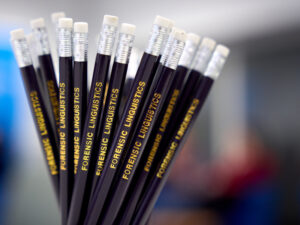
En el blog, la Dra. Queralt comenta casos de actualidad en los que la LF tiene un papel relevante y lo hace con un estilo ameno para captar la atención del lector y conseguir que se interese por esta rama de la Lingüística aún bastante desconocida en nuestro país. Algunas de las últimas entradas llevan títulos tan sugerentes como:

  • Pistas para detectar a psicópatas y narcisistas por sus palabras
  • Chat-GPT, ¿una tentación irresistible para los estudiantes o una exageración?
  • Las palabras de Miguel Ricart, único condenado por el crimen de Alcàsser
  • La lingüística forense, una prueba pericial en casos de violencia de género
  • La lingüística forense contra el cibercrimen

Etc., etc.

No olvides suscribirte al blog para recibir en tu correo una notificación siempre que haya una nueva publicación: puede hacerlo en el formulario disponible en cada entrada del blog.


«Por la boca muere el malo» está integrado en la plataforma Archiletras, descrito como «un medio global y panhispánico, impreso y digital, en torno a la lengua española» y que engloba diversos blogs y publicaciones en papel con la lengua española como eje vertebrador.

Filed Under: Blogs, News, Resources Tagged With: Por la boca muere el malo, Sheila Queralt

«El sonido del crimen», new fiction podcast on Spotify

1 February, 2023 por Corpus Delicti Leave a Comment

Filed Under: News Tagged With: Podcast, Sonido del Crimen, Spotify

«Is there a language of fake news? Some answers from the Fakespeak project» (AIFL Seminar: 2/2/2023)

1 February, 2023 por Corpus Delicti Leave a Comment

Fake News

Title: Is there a language of fake news? Some answers from the Fakespeak project

Speaker: Dr Nele Põldvere (University of Oslo)

Date and time: Thu, February 2, 2023, 4:00 PM – 5:00 PM GMT  (This is an online talk taking place on Microsoft Teams. The link to join will be sent out on the day of the talk.)

Link for reservations

Organized by: Aston Institute for Forensic Linguistics

Abstract:

In this talk, I will present some findings from a large project on the language of fake news, called Fakespeak. The goal of the project is to find out whether or not fake news is characterised by a distinct set of linguistic features that would allow us to speak of a language of fake news. Research on this topic has gained much ground in other disciplines, such as computer science, but in linguistics, it is still quite new. Grieve and Woodfield (forthcoming) have taken important steps towards establishing a linguistically driven approach to fake news, one that is grounded in existing linguistic theory and where the data are of high quality, i.e., controlled for a number of variables. In the Fakespeak project, we add to their research by drawing on the linguistic theories of Conceptual Metaphor Theory (Lakoff & Johnson, 1980) and Appraisal Theory (Martin & White, 2005) to determine the defining metaphorical and evaluative features of fake news, respectively. The data are of different kinds. We make use of the Jayson Blair corpus used in Grieve and Woodfield, but we have also built new corpora, both large and small, to be able to generalise our results to different types of fake news.

References

Grieve, J., & Woodfield, H. (forthcoming). The language of fake news. Cambridge Elements in Forensic Linguistics. Cambridge University Press.

Lakoff, G., & Johnson, M. (1980). Metaphors we live by. Chicago University Press.

Martin, J. R., & White, P. R. R. (2005). The language of evaluation: Appraisal in English. Palgrave Macmillan.

Filed Under: Events, News

FoLD: Forensic Linguistic Databank at Aston Institute

20 December, 2021 por Corpus Delicti Leave a Comment

The Aston Institute for Forensic Linguistics (AIFL) has made publicly available its “Forensic Linguistic Databank” (F0LD),  a permanent, controlled access online repository for forensic linguistic data, including malicious communication data, investigative interview data, and forensic evidence validation data for both speech and text.

FoLD comprises a wide range of datasets with relevance to forensic linguistics and language and law, including commercial extortion letters, investigative interviews in police and other contexts, legal documents, forum posts from far-right online groups, and comment threads from political blogs.

The intention for the databank is to not only further academic research into forensic linguistics by developing new methods and approaches but also to directly contribute to impact in assisting the delivery of justice. Therefore, research projects using this data will validate methods for forensic analysis, further the effectiveness of interviewing techniques used by British police, and help tackle internet crime and abuse on behalf of law enforcement beneficiaries, such as the National Crime Agency.

Some recent additions to FoLD are:

  • The Shipman Inquiry ( the collection of all documents pertaining to the Shipman Inquiry, the trial for dr. Harold Fredrick Shipman, who was convicted at Preston Crown Court on 31 January 2000 of the murder of 15 of his patients and of one count of forging a will.
  • Pledges to Harm: 8 non-realized pledges to harm, where no real-world violence was attempted, totaling 1,552 words. 6 realized pledges to harm, where real-world violence was attempted, totaling 2,638 words. 10 of the 14 were authored between 2014-2016. The earliest text is from 1998. All are written in some variety of American English.
  • Threat letters transcribed data from the FBI: Vault (2021): Fifty threatening texts were obtained and transcribed from FBI vault.
  • Michelle Carter/Conrad Roy text messages: The series of text messages between Michelle Carter and Conrad Roy as submitted in evidence in the 2015-2017 trial ‘Commonwealth v. Michelle Carter’. Carter was convicted of involuntary manslaughter. The dataset includes references to suicide. The messages total 184 pages over 112 days (1st June 2014 to 21st September 2014).
  • Etc, Etc.

An invaluable resource to discover and document forensic linguistic cases: an absolute must for new TFGers.

Filed Under: News, Resources Tagged With: Aston Institute for Forensic Linguistics, Forensic Linguistics Databank

New podcast and documents released on the Unabomber case by James R. Fitzgerald

1 May, 2021 por BeatrizBN Leave a Comment

Hello everyone!

We have good news!

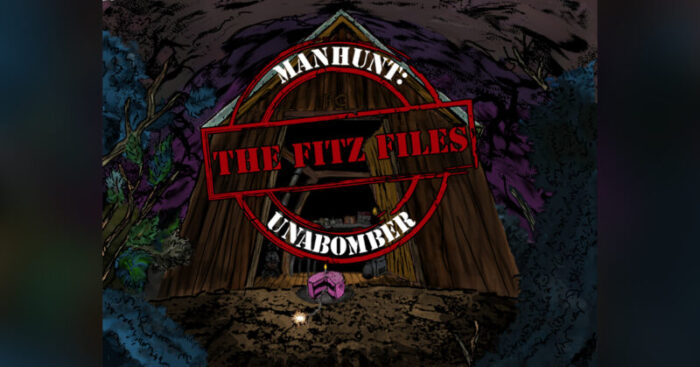
Through the “Forensic Linguistics” mailing list, we have been notified that James R. Fitzgerald (the forensic linguist and FBI agent who caught the Unabomber by analyzing his writings) has recently published a new podcast where he talks about the series/documentary on Netflix: “Manhunt: Unabomber”. Moreover, he has also released two of the official documents that were used to prove that Ted Kaczynski was the Unabomber, the person who wrote the “Unabomber Manifesto”. All this on the occasion of the 25th anniversary of Ted’s arrest.

Thus, in that series the events that occurred between 1978 and 1998 are recounted. However, in the podcast, titled ” The Fitz Files – Manhunt: Unabomber”, Fitzgerald talks about the differences between reality and fiction, and he does so in eight episodes, as well as a prologue and a epilogue.

Here’s the link to his personal page with the links for the podcast episodes: https://www.jamesrfitzgerald.com/the-fitz-files-manhunt-unabomber/

In addition to the podcast, Fitzgerald also announced that he was going to publish two documents that were used for the arrest of the suspect. Thus, one was one of the documents written by Ted in 1971 (a 23-page document) and the other was the 47-page document/report/affidavit with the FBI Comparative Analysis between Ted’s writings and the Unabomber Manifesto, which was decisive to obtain the warrant for being able to search Kaczynski’s cabin.

Here is the link to episode seven of the podcast, where you will also find the two documents already mentioned: https://www.jamesrfitzgerald.com/the-fitz-files-manhunt-unabomber-episode-7-lincoln/

In addition to all this, Fitzgerald has also announced that he will donate all the Unabomber-related documents in his possession (about 6000 pages) to the California University of Pennsylvania. There, the documents will be digitized and made public for researchers.

This is great news for everyone interested in this famous and high-repercussion case. I also want to mention that I (Beatriz) am personally especially excited since it is a very good opportunity to expand and deepen more in this case. I leave you the link to the information that I have already published about it, so that you can take a look if you want, and it will soon be updated with this new information:

https://blogs.ugr.es/corpusdelicti/category/cases/unabomber/


Have a nice day!

Filed Under: Anonymous messages, Authorship attribution, Cases, News, Unabomber Tagged With: James D. Fitzgerald

  • Page 1
  • Page 2
  • Page 3
  • Go to Next Page »

Primary Sidebar

Receive notifications in your e-mail when new posts are published

Categories

  • About (1)
  • Cases (11)
    • Helena Jubany (2)
    • Jack the Ripper (1)
    • Jonbénet Ramsey (1)
    • Paul Prinzivalli (1)
    • Unabomber (2)
    • Virginia Woolf's Suicide Letters (1)
  • Categories (10)
    • Authorship attribution (10)
      • Anonymous messages (3)
      • Suicide Letters (2)
  • Events (7)
  • News (14)
  • Resources (7)
    • Blogs (1)
    • Centers (1)
    • Journals (3)
    • Lectures/Seminars (1)
  • The Team (1)

Universidad de Granada
blogsUgr
C.S.I.R.C. · Plataformas webs corporativas
Log in

En BlogsUGR utilizamos cookies propias con finalidad técnica y para personalizar su experiencia de usuario. Algunos blogs de BlogsUGR pueden utilizar cookies de terceros para fines analíticos.


Puede aprender más sobre qué cookies utilizamos o desactivarlas en los .

CORPUS DELICTI
Powered by  GDPR Cookie Compliance
Resumen de privacidad

BlogsUGR utiliza cookies propias para que podamos ofrecerte la mejor experiencia de usuario posible. La información de las cookies se almacena en tu navegador y realiza funciones tales como reconocerte cuando vuelves a BlogsUGR, haces algún comentario o seleccionas el idioma de un blog. Rechazar las cookies propias podría suponer la imposibilidad de acceder como usuario a BlogsUGR.

Algunos blogs de BlogsUGR utilizan cookies de terceros con fines analíticos para recabar estadísticas sobre la actividad del usuario en dicho blog y la actividad general del  mismo.

Cookies estrictamente necesarias

Las cookies estrictamente necesarias tiene que activarse siempre para que podamos guardar tus preferencias de ajustes de cookies.

Cookies de terceros

Algunos blogs de BlogsUGR utilizan Google Analytics para recopilar información anónima tal como el número de visitantes del sitio, o las páginas más populares.

Dejar esta cookie activa nos permite mejorar nuestra web.

También algunos blogs de BlogsUGR utilizan cookies de twitter.com que se utilizan para la visualización de esta red social en el blog.

Política de cookies

La presente política de cookies tiene por finalidad informarle de manera clara y precisa sobre las cookies que se utilizan en los blogs del servicio BlogsUGR de la Universidad de Granada.

¿Qué son las cookies?

Una cookie es un pequeño fragmento de texto que los sitios web que visita envían al navegador y que permite que el sitio web recuerde información sobre su visita, como su idioma preferido y otras opciones, con el fin de facilitar su próxima visita y hacer que el sitio le resulte más útil. Las cookies desempeñan un papel muy importante y contribuyen a tener una mejor experiencia de navegación para el usuario.

Tipos de cookies

Según quién sea la entidad que gestione el dominio desde dónde se envían las cookies y se traten los datos que se obtengan, se pueden distinguir dos tipos: cookies propias y cookies de terceros.

Existe también una segunda clasificación según el plazo de tiempo que permanecen almacenadas en el navegador del cliente, pudiendo tratarse de cookies de sesión o cookies persistentes.

Por último, existe otra clasificación con cinco tipos de cookies según la finalidad para la que se traten los datos obtenidos: cookies técnicas, cookies de personalización, cookies de análisis, cookies publicitarias y cookies de publicidad comportamental.

Para más información a este respecto puede consultar la Guía sobre el uso de las cookies de la Agencia Española de Protección de Datos.

Cookies utilizadas en la web

A continuación se identifican las cookies que están siendo utilizadas en este portal así como su tipología y función:

Todos los blogs de BlogsUGR utilizan cookies técnicas y propias, necesarias para la personalización de su experiencia de usuario y para el mantenimiento de sesión.

Algunos blogs de BlogsUGR pueden utilizar cookies de Twitter para personalizar la visualización de dicha red social en el blog.

Algunos blogs de BlogsUGR pueden utilizar Google Analytics, un servicio de analítica web desarrollada por Google, que permite la medición y análisis de la navegación en las páginas web. En su navegador podrá observar cookies de este servicio. Según la tipología anterior se trata de cookies  de terceros, de sesión y de análisis.

A través de esta analítica web se obtiene información relativa al número de usuarios que acceden a la web, el número de páginas vistas, la frecuencia y repetición de las visitas, su duración, el navegador utilizado, el operador que presta el servicio, el idioma, el terminal que utiliza y la ciudad a la que está asignada su dirección IP. Información que posibilita un mejor y más apropiado servicio por parte de este portal.

Para garantizar el anonimato, Google convertirá su información en anónima truncando la dirección IP antes de almacenarla, de forma que Google Analytics no se usa para localizar o recabar información personal identificable de los visitantes del sitio. Google solo podrá enviar la información recabada por Google Analytics a terceros cuanto esté legalmente obligado a ello. Con arreglo a las condiciones de prestación del servicio de Google Analytics, Google no asociará su dirección IP a ningún otro dato conservado por Google.