• Saltar a la navegación principal
  • Saltar al contenido principal
  • Saltar a la barra lateral principal
  • Saltar al pie de página
  • Home
  • Students’ World
    • Erasmus Experiences
    • Improve your English
  • Professors Beyond the Classroom
    • Interviews
  • Events
    • Agenda
    • Lectures’ Articles
    • Cultural Events
  • Off Campus
    • Suggested Readings
    • Let’s go to the movies
    • Recipes
      • Christmas Recipes Special
  • Contacto

the philologist /UGR/

  • El blog de los estudiantes del Departamento de Filologías Inglesa y Alemana de la Universidad de Granada
Usted está aquí: Inicio / Archivo de Corpus Delicti

INDIA: Mango Chutney, India domesticada (en español)

21 diciembre, 2016 por Corpus Delicti 1 comentario

En la receta del especial de Navidad de hoy, Mauricio Aguilera, profesor del grado de Estudios Ingleses, nos trae una receta de la India. De nuevo le añade no sólo su toque personal a la receta, si no a la introducción, que nos ayuda a entender mejor el contexto cultural en el que nació la misma. Aquí tenéis su receta:
india

El mango es la fruta nacional de la India, Pakistán y Bangladesh. La palabra (mangga) procede del malayalam (o malabar), una de las lenguas oficiales de la India que se habla en Kérala (sí, con acento en la primera sílaba) y que se incorporó al resto de las lenguas europeas a través del portugués a finales del SXV, cuando estos comerciaban con especias en Calicut. La palabra Chutney procede del hindi “Chatni”, una especie de salsa espesa muy condimentada que preservaba el excedente de fruta en buenas condiciones y que se servía como acompañamiento. Lo que conocemos como mango chutney es evidentemente una salsa muy liviana, una especie de compota que los británicos adaptaron, como el curry, a sus insípidos paladares. El chatni en la India es bastante picante y como no hay vinagre se utiliza zumo de lima. El resultado se parece poco a lo que los británicos copiaron.

La siguiente receta es fácil. No requiere de ingredientes difíciles y, dado que se pueden encontrar mangos y jengibre sin dificultad, es una receta que yo hago con frecuencia en Navidad y que también sirve como regalo navideño.

Ingredientes:

  1. Mangos (verdes, todavía duros, los maduros no sirven). Un kilo.
  2. 4 cucharadas de sal
  3. 600 ml de agua
  4. 450 g de azúcar
  5. 450 ml de vinagre
  6. 2 cucharaditas de jengibre fresco finamente picado
  7. 2 cucharaditas de ajo chafado
  8. 2 guindillas troceadas
  9. 2 ramitas de canela y media cucharadita de clavo
  10. 75 g de pasas

Pasos:

  1. Pela los mangos y córtalos en dados. Colócalos en un cuenco grande, añade la sal y el agua y déjalos reposar toda una noche. Escurre el agua y reserva.
  2. En una cacerola lleva el azúcar y el vinagre a ebullición a fuego suave, removiendo.
  3. Añade el mango.
  4. Añade el jengibre, el clavo, la canela, el ajo, las pasas y la guindilla. Remueve hasta que hierva de nuevo. Baja el fuego y déjalo una hora o hasta que la mezcla se espese. Retira el chutney del fuego y deja enfriar.
  5. Hay quien retira las ramitas de canela. Yo las dejo.
  6. Vierte el chutney en tarros secos y limpios con tapon de rosca.


Autor: Mauricio Aguilera Linde

Edición e imagen: E.R.S.
Publicado en: Christmas Recipes Special, Recipes Etiquetado como: Christmas, chutney, India, mango, Mango Chutney, Mauricio Aguilera Linde, Navidad, Receta, Recipe

GERMANY: Spitzbuben / Galletitas alemanas (en alemán, inglés y español)

20 diciembre, 2016 por Corpus Delicti Deja un comentario

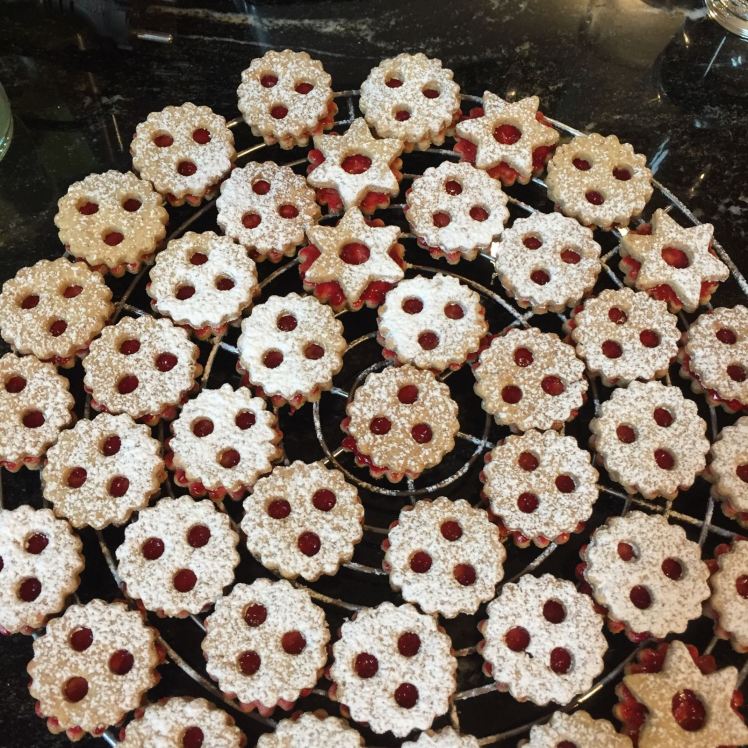
¡Hoy traemos una receta alemana! Viene de la mano de una profesora del Departamento, Rebecca Cramer. Y nos trae unas galletitas alemanas que además nos envía en alemán, inglés y español, así que nadie tiene excusa para no intentar prepararlas… ¡Aquí teneis la receta!

spitzbuben

Spitzbuben

Für den Teig:

  1. 375 g Mehl.
  2. 1 Teelöffel Backpulver.
  3. 175 g Zucker.
  4. 1 Päckchen Vanillezucker.
  5. 1 Priese Salz.
  6. 125 g gemahlene Mandeln (oder Haselnüsse).
  7. 250 g kalte Butter, in Flocken.
  8. 1 Eigelb.

Für die Verzierung:

  1. Himbeermarmelade.
  2. Puderzucker.

Zubereitung:
1. Alle Zutaten in eine Schüssel geben und zügig zu einem Teig verkneten. Den Teig im
Kühlschrank ca. 1 Stunde kühl stellen.
2. Den Backofen vorheizen (160°C) und ein Backblech mit Backpapier belegen.
3. Die Arbeitsplatte mit Mehl bestäuben und den Teig ca. 2 mm dick ausrollen. Plätzchen
ausstechen, immer jeweils eins mit und eins ohne Loch (der klassische „Spitzbube“ ist rund aber natürlich kann man auch jede andere Form nehmen, mehr Löcher ausstechen,…). Die Plätzchen auf das Backblech legen und ca. 10-12 Minuten backen. Auf einem Gitter abkühlen lassen.
4. Die Plätzchen ohne Loch mit Marmelade bestreichen. Die Plätzchen mit Loch mit Puderzucker bestäuben.
5. Jeweils ein Plätzchen mit Loch auf eins ohne Loch setzen und zusammenkleben. Genießen!

Am besten kann man die Plätzchen in einer Metalldose zwischen Lagen von Backpapier

aufbewahren. So bleiben sie schön und knusprig.

German Cookies

Ingredients for the dough:

  1. 375g strong/bread flour.
  2. 1 teaspoon baking powder.
  3. 175g sugar.
  4. 1 pouch vanilla sugar.
  5. 1 pinch of salt.
  6. 125g ground almonds (or ground hazelnuts).
  7. 250 cold butter, diced.
  8. 1 egg yolk.

Ingredients for the garnish:

  1. Raspberry jam.
  2. Icing sugar.

Directions:

  1. For the dough, mix all the ingredients and beat until combined well. Refrigerate dough for one hour.
  2. Preheat the oven to 160ºC and put grease proof paper on the baking tray
  3. Sprinkle the countertop with flour and roll out the dough, about 2 mm thick, and cut into shapes in pairs, one with and one without holes (the traditional “Spitzbube” is round but you can of course choose the shape you like, make more holes, …). Place the cookies on the tray and bake for 10 to 12 minutes. Chill on a rack.
  4. Spread the cookies without holes with a layer of jam. Then, garnish the cookies with holes with icing sugar.
  5. Put the cookies with sugar on top of the cookies with jam and… enjoy!

Keep them in a metallic box with grease proof paper in between layers of cookies: that way they will remain crispy and will look nice!

Galletitas alemanas

Ingredientes para la masa:

  1. 375 g harina de fuerza.
  2. 1 cucharadita de levadura química.
  3. 175 g azúcar.
  4. 1 sobre azúcar de vanilla.
  5. 1 pizca de sal.
  6. 125 g almendras molidas (o avellanas molidas).
  7. 250 g de mantequilla (fría), cortada en trocitos.
  8. 1 yema.

Ingredientes para la decoración:

  1. Mermelada de frambuesa.
  2. Azúcar glasé.

Pasos:

1. Para la masa, mezcla todos los ingredientes y amasa rápidamente. Deja reposar durante una hora en el frigorífico.
2. Precalienta el horno (160°C) y prepara una bandeja con papel de horno.
3. Espolvorea la encimera con un poco de harina y estira la masa (ca. 2 mm). Recorta las galletas, siempre en pares uno con y uno sin agujero (el clásico „Spitzbube“ es redondo pero desde luego puedes usar cualquier molde que te guste, cortar más agujeros, …). Pon las galletas sobre la bandeja y hornea entre 10 y 12 minutos. Deja enfriar en una rejilla.
4. Unta las galletas sin agujero con una capa de mermelada. Espolvorea las galletas con agujero con el azúcar glacé.
5. Pon una galleta con azúcar sobre una con mermelada y… listo para disfrutar!

Guárdalas en una caja metálica entre capas de papel pergamino (papel de horno). Así mantienen su pinta y quedan crujientes.
Fröhliche Weihnachten!


Author: Rebecca Cramer

Image: Rebecca Cramer

Editors: C.L.C., E.R.S.

Publicado en: Christmas Recipes Special, Recipes Etiquetado como: Alemania, Christmas, cookies, galletas, Galletitas alemanas, Germany, Navidad, Rebecca Cramer, Receta, Recipe, Spitzbuben

SPAIN: Turkey in sauce (en inglés)

20 diciembre, 2016 por Corpus Delicti 1 comentario

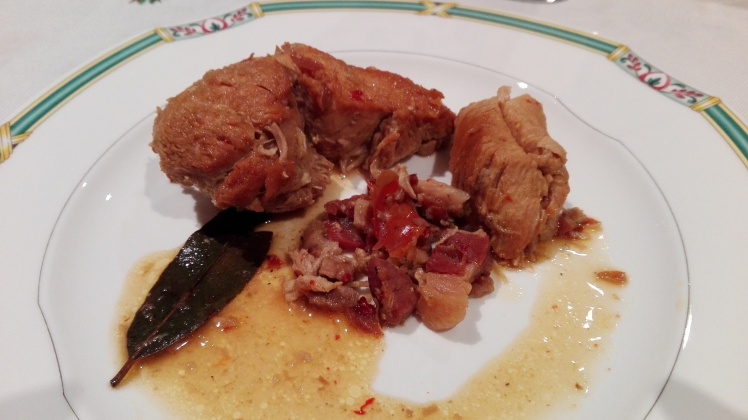
Today we have a Spanish recipe written by one of the members of our team, Belén Molero, student of the last year of English Studies. She says she really likes this family recipe and wanted to share it with all of us!

Turkey in sauce

In Spain it is traditional at Christmas to make recipes with turkey, as well as with lamb. At Christmas, my family traditionally cook this recipe. My mother has done it thanks to my grandmother who is a great cook. The recipe was a bit modified by my mother, and the result was very good!

Ingredients:

  1. 1/2 turkey (if you want to do it with one turkey just double the quantities of the ingredients).
  2. 1/2 glass of sherry wine.
  3. 1 glass of white wine (specialized for cooking).
  4. 1 piece of Serrano ham.
  5. 1 dried red pepper.
  6. 1 onion.
  7. 1 leave of bay.
  8. 1/2 head of garlic.
  9. 1 small ripped tomato.
  10. 2 strips of bacon / 2 strips of double chin.
  11. 3 glasses of lukewarm / hot water (approx.).
  12. Pepper.
  13. Salt.
  14. Olive oil.

Directions:

  1. Chop the turkey. Put some olive oil in a pot. Put the turkey in it and brown it slowly. Meanwhile cut the Serrano ham and the strips of bacon or of double chin into small pieces. When the turkey is browned add salt and pepper to it.
  2. Cut the onion in julienne strips (you can brown it a little, but it’s optional). Add into the pot the onion with the rest of ingredients (except the wines) one by one, not all of them at the same time.
  3. Stir the ingredients which are in the pot. Then add the glass of white wine and the half glass of sherry. When the wine has been boiling for a while, add the three glasses of water. Simmer it (you can do it in a pressure cooker, simmering it for ten to fifteen minutes).
  4. When it’s ready serve it and enjoy it. It’s delicious!


Author and image: B.M.A.

Editor: E.R.S.

Publicado en: Christmas Recipes Special, Recipes Etiquetado como: Christmas, España, Navidad, Receta, Recipe, Spain, Turkey, Turkey in sauce

EE.UU.: Gombó de Navidad (Seafood Gumbo) (en español)

19 diciembre, 2016 por Corpus Delicti Deja un comentario

Mauricio Aguilera, profesor del Grado en Estudios Ingleses, nos presenta hoy no sólo una receta de EE.UU., si no una introducción tan interesante como cautivadora. ¡Disfrutad!

ee-uu

Luisiana es decididamente el lugar donde presente y pasado, raíces aborígenes y negras y la presencia colonial francesa y española se funden en un crisol de culturas donde ya no se distinguen procedencias ni resultan creíbles certificados de origen. Kate Chopin inmortalizó el susurro de las espigas de arroz en los bayous, las tierras bajas que rodean al Mississippi cuando este se vuelve perezoso antes de entregarse al mar, y los negros se mezclaban con blancos e indios Choctaw. Tennessee Williams se enamoró allí, no sé si caminando por Bourbon Street o sentado en algún café de Vieux Carre con una taza de “coffee milk” (café con leche en la jerga con aires parisinos de la gente de New Orleans), o tal vez quiso desenamorarse, que resulta casi siempre una experiencia más rentable para para la literatura.

Esta receta es una receta “cajun”, esto es procedente de la mezcla de los criollos afrancesados (Acadians) y de las tradiciones autóctonas (Choctaw) y, por supuesto, de los esclavos.

La palabra GUMBO es una palabra cargada de polémica sobre su origen. Hay quienes le atribuyen una etimología amerindia aunque es más probable que fueran los esclavos de la costa occidental de África quienes la trajeran. “ki ngombo”, el quigombó o simplemente gombó es una palabra bantú y significa okra, una vaina procedente de África y que es la base esencial para hacer este caldo espeso donde se mezclan un buen número de ingredientes.

¿Podemos cocinar gombó en Granada? La respuesta es sí. La okra puede verse en una cadena de supermercado nacional, eso sí a un precio elevado. El ingrediente imposible pero por otro lado prescindible es el sasafrás, hojas de un árbol originario de América de un sabor ligeramente ácido y cuyo nombre le debemos al botánico español del SXVI, Nicolás Monardes.

El gombó de marisco es un plato típico de Navidad tal vez porque contiene gambas y cangrejo.

Aquí va la receta.


Ingredientes:

  1. Aceite
  2. Cebolla picada (3 tazas).
  3. Apio troceado (2 tazas).
  4. Pimiento verde (una taza).
  5. Media taza de harina (de arroz preferentemente pero de otro tipo valdrá).
  6. Ajo laminado (una cuchara sopera).
  7. Dos hojas de laurel
  8. Dos ramitas de tomillo fresco) o media cucharada de tomillo seco
  9. Sal y pimienta.
  10. Cayena (TABASCO es una marca de Luisiana).
  11. Medio kilo de okra.
  12. Perejil.
  13. Un kilo de de gambas medianas (peladas pero reserva las cáscaras)
  14. Medio kilo de cangrejo.
  15. Agua (3 1/2 litros para el caldo).


Pasos:

  1. Coloca las cáscaras y cabezas de gambas, las hojas de laurel, el tomillo, un poco de ajo, y descartes del apio y la cebolla en una cacerola con agua y llévala a punto de ebullición. Pon el fuego entonces al mínimo y mantén hirviendo media hora. Cuando se haya reducido el caldo, cuélalo y déjalo aparte.
  2. En un sartén saltea la okra hasta que deje de estar pegajosa durante unos 20 minutos.
  3. En una cacerola añade aceite, harina y la cebolla y comienza a calentar y remover hasta que la cebolla se dore y la harina se tueste. Conseguirás una tonalidad oscura, de color chocolate.
  4. Añade entonces la cebolla, el apio, el ajo, el pimiento. Añade caldo (2 tazas) y mézclalo hasta que todo quede diluido. Cocina durante 10 minutos.
  5. Sazona al gusto y mantén en punto de ebullición cinco minutos.
  6. Cocina a fuego lento una hora.
  7. Incorpora las gambas, el cangrejo, las okras y el resto del caldo. Cocina durante 5 minutos.
  8. Sirve con arroz blanco.


Autor: Mauricio Aguilera Linde

Imagen/edición: E.R.S.

Publicado en: Christmas Recipes Special, Recipes Etiquetado como: Christmas, EE.UU., Gombó de Navidad, Gumbo, Kate Chopin, Luisiana, Mauricio Aguilera Linde, Navidad, Receta, Recipe, Seafood, Tennessee Williams, USA

NEW ZEALAND: Pavlova (en inglés)

19 diciembre, 2016 por Corpus Delicti Deja un comentario

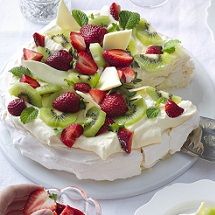
Having good friends around the world is so good for so many reasons… They can send you their recipes for Christmas directly from New Zealand! I have a friend from Wellington who decided to send me a very typical recipe for Christmas the moment she knew about the blog. She told me that, in order to be called a New Zealand pavlova, we cannot forget to put a lot of kiwi on top of that! She follows this recipe from the Chelsea Sugar web page (a very famous brand of sugar in New Zealand):

pavlova-chelsea-sugar

Ingredients:

  1. 6 egg whites (at room temperature).
  2. 2 cups Chelsea Caster Sugar.
  3. 1 tsp vanilla essence.
  4. 1 tsp white vinegar.
  5. 2 tsp cornflour.
  6. 300ml cream, whipped.
  7. Fruit for decoration.

Directions:

  1. Pre-heat oven to 110ºC bake (not fan bake).
  2. Line a baking tray with baking paper.
  3. In a large metal, ceramic or glass bowl (not plastic), beat the egg whites until soft peaks form.
  4. Continue beating while adding the sugar a quarter of a cup at a time. The mixture should get glossier and thicker with each addition and this should take at least 10 minutes. Beat in the vanilla, vinegar and cornflour.
  5. Spoon mixture out prepared tray into a dinner plate sized mound.
  6. Bake for approximately 1 1/2 hours, until dry and crisp and it lifts easily off the baking paper. Cool on a wire rack.
  7. When completely cool, place on a serving plate, swirl the top with the whipped cream and decorate with sliced or chopped fruit of your choice (as my friend Sarah says: a lot of kiwi!!)
  8. Tips: Older eggs work better as the white breaks down easier. Wipe the bowl beforehand with lemon juice to remove any greasy residue before beating the egg whites (grease affects the ability for the egg whites to form peaks). Caster sugar is needed as the fine crystal size traps and holds air – more air is trapped because there are more crystals.

Sent by: Sarah McGoverne

Source: http://www.chelsea.co.nz/browse-recipes/pavlova/

Image: http://www.chelsea.co.nz/browse-recipes/pavlova/

Editor: E.R.S.

Publicado en: Christmas Recipes Special, Recipes Etiquetado como: Christmas, Navidad, New Zealand, Nueva Zelanda, pavlova, Receta, Recipe

SCOTLAND (UK): Scottish Shortbread / Galletas de mantequilla (en inglés)

18 diciembre, 2016 por Corpus Delicti Deja un comentario

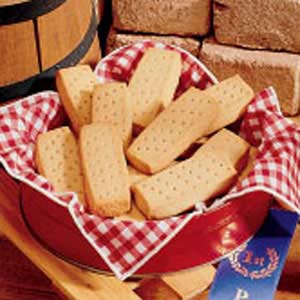
Today’s special recipe comes from Ana Díaz Negrillo, professor of the Department of English and German, and it is a Scottish Shortbread. It brings a very informative introducction so we can learn a little bit about Scotland’s culture and history. What are you waiting? Keep on reading!

scottish_shortbread_1325

Scottish cookery has always differed from culinary endeavours south of the Border. The Romans influenced English cooking but as they did not venture far into Scotland, historically Scottish cuisine developed slowly. Scottish cooking methods advanced through the influence of the French at the court of Mary Queen of Scots and later through the elaborate dishes served to English lords with Scottish estates. Queen Victoria and Prince Albert acquired Balmoral in the 19th century and whilst they brought with them the rich food of the English court, they also liked to serve traditional Scottish dishes to important visitors.

Scottish cooks have always been famous for their soups, haggis (a dish traditionally served on Burns Night) and their baking, especially scones, pancakes, fruit cakes, oatcakes and shortbread.

The story of shortbread begins with the medieval «biscuit bread». Any leftover dough from bread making was dried out in a low oven until it hardened into a type of rusk: the word «biscuit» means «twice cooked». Gradually the yeast in the bread was replaced by butter, and biscuit bread developed into shortbread.

Shortbread was an expensive luxury and for ordinary people, shortbread was a special treat reserved just for special occasions such as weddings, Christmas and New Year. In Shetland it was traditional to break a decorated shortbread cake over the head of a new bride on the threshold of her new home. The custom of eating shortbread at New Year has its origins in the ancient pagan Yule Cakes which symbolised the sun. In Scotland it is still traditionally offered to «first footers» at New Year.

Shortbread has been attributed to Mary, Queen of Scots, who in the mid-16th century was said to be very fond of Petticoat Tails, a thin, crisp, buttery shortbread originally flavoured with caraway seeds.

There are two theories regarding the name of these biscuits. It has been suggested that the name «petticoat tail» may be a corruption of the French petites gatelles («little cakes»).

However these traditional Scottish shortbread biscuits may in fact date back beyond the 12th century. The triangles fit together into a circle and echo the shape of the pieces of fabric used to make a full-gored petticoat during the reign of Elizabeth I. The theory here is that the name may have come from the word for the pattern which was ‘tally’, and so the biscuits became known as ‘petticoat tallis’.

Shortbread is traditionally formed into one of three shapes: one large circle divided into segments («Petticoat Tails»); individual round biscuits («Shortbread Rounds»); or a thick rectangular slab cut into «fingers».


Ingredients:

  1. 200g/7oz unsalted butter, at room temperature, cut into small cubes
  2. 100g/3½oz sugar, plus extra for sprinkling
  3. 1 tsp vanilla extract
  4. 300g/10½oz plain flour, sifted, plus extra for dusting

Directions:

  1. Preheat the oven to 160C/325F/Gas 3.
  2. Mix together the butter and sugar, either by hand or using an electric hand whisk, until pale and smooth. Add the vanilla extract, then gently mix in the flour until completely incorporated (try not to work the flour too much or the biscuits will not be so crumbly). Using your hands, squeeze the mixture together into a ball of dough.
  3. Gently roll the dough out to about 5mm/¼in thick (dust the work surface with a little flour if the dough sticks). Cut into shapes using a biscuit cutter. Transfer the biscuits to a baking tray lined with baking parchment (or a non-stick baking tray) and chill in the fridge for 15 minutes to rest (chilling makes them hold their shape better when baking).
  4. Before cooking, sprinkle each biscuit with a pinch of granulated sugar. Bake in the preheated oven for 15-20 minutes, or until pale golden-brown.
  5. Remove from the oven and transfer the biscuits to a wire rack to cool.

Enjoy!

Sent by: Ana Díaz Negrillo

Source: http://www.bbc.co.uk/food/recipes/butter_shortbread_74896

Image: http://cookdiary.net/scottish-shortbread/

Editors: C.L.C., E.R.S.

Publicado en: Christmas Recipes Special, Recipes Etiquetado como: Christmas, Escocia, galletas de mantequilla, Navidad, Queen Victoria, Receta, Recipe, Reino Unido, Scotland, Scottish cookery, Scottish Shortbread, Shortbread, UK

II Jornadas de Estudios Irlandeses (Crónica)

18 diciembre, 2016 por Corpus Delicti 1 comentario

Como sabéis, del 12 al 16 de diciembre se celebraron las Segundas Jornadas de Estudios Irlandeses en la Facultad de Filosofía y Letras. Organizadas por el Centro de Estudios Irlandeses y dirigidas por Pilar Villar Argáiz y Burcu Gülüm Tekin, han reunido a expertos de los más diversos ámbitos relacionados con la cultura y la historia irlandesas. [Leer más…] acerca de II Jornadas de Estudios Irlandeses (Crónica)

Publicado en: Lectures' Articles Etiquetado como: Ángela Rivera, Burcu Gülüm Tekin, Celia Prados, Christian Ferrer, Cine, conferencia, Cultura, Culture, dance, danza, Deirdre Madden, Dublín, ecocrítica, Eiléan Ní Chuilleanáin, Eimar O’Duffy, Encarnación Hidalgo Tenorio, Historia, History, II Jornadas de Estudios Irlandeses, Ireland, Irish, Irlanda, James Joyce, Jeanne Ritchie, John Keating, Jornadas de Estudios Irlandeses, José Ruiz Mas, Josefa Ruiz Resa, Juan Ráez Padilla, Katherine O’Donnell, LGBTQ, lingüística, linguistics, Literatura, Literature, Louis MacNeice, Luis Antonio Rivera, Macdara Woods, Maeve Kelly, Marjan Shokouhi, Mary McPartlan, Maurice Fitzpatrick, Maurizio Toscano, Miguel Ángel Benítez Castro, Music, Música, Peter Kavanagh, Pilar Villar-Argáiz, Poesía, Poetry, Roddy Doyle, Rorey O’Neill, Samuel Beckett, Seamus Heaney, Seminario, W.B. Yeats

SPAIN: Vegan Christmas menu (en inglés)

17 diciembre, 2016 por Corpus Delicti Deja un comentario

Today we have a whole Christmas menu. Besides, it is a vegan menu, and the author is Margarita Carretero, a professor of the Department of English and German. For those who do not know her, she has a blog where she publishes vegan recipes in English and Spanish: Mi rincón vegaterráneo / My vegaterranean corner, so you can go there and take a look at her delicious recipes! But for now, let’s see what she had in mind for us…

Appetizers:

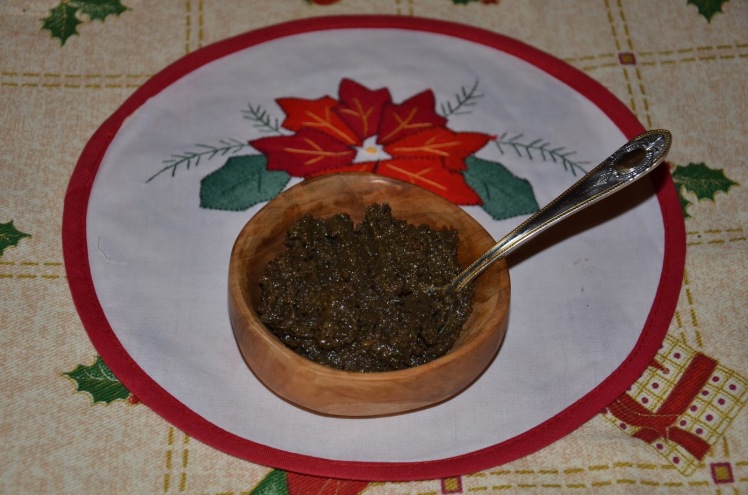
1. Vegan «garlicky» tapenade (Adapted from Greta Jansen’s Recetas Veganas)

Ingredients: Makes one jar (about 250 ml)
  1. 1 handful parsley.
  2. 300 gr stoned black olives.
  3. 3 garlic cloves.
  4. 1 small cayenne pepper.
  5. 3 teaspoons capers.
  6. 75 ml olive oil + extra.
  7. Salt and pepper.

Directions:

  1. Wash the parsley, shake it well and chop it finely. Chop the olives and crumble the cayenne pepper.
  2. Peel and crush the garlic cloves. Place everything in a blender with the capers and the olive oil and mix until you get a homogeneous paste, adding more olive oil if too thick. Add salt and pepper generously.
  3. Put the resulting mixture in a glass jar and fill it up with a little olive oil. You can keep it in the fridge for up to two weeks.

tepenade

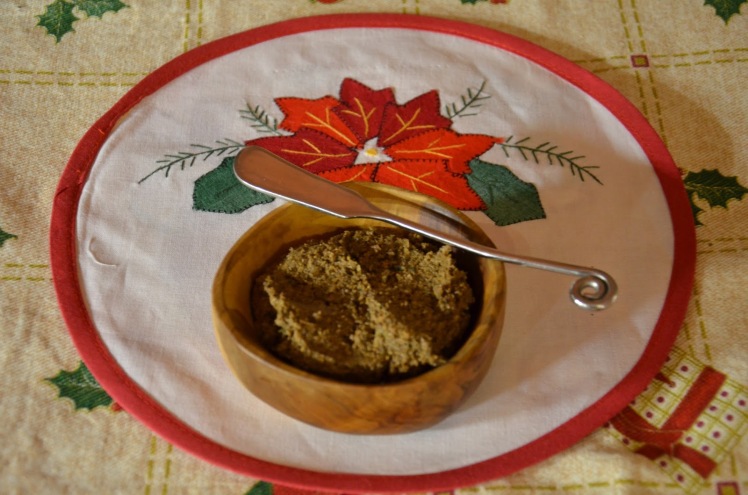
2. Vegan spread with marjoram (Adapted from Greta Jansen’s Recetas Veganas)

Ingredients: Makes one jar (about 250 ml)
  1. 1 onion.
  2. 1 garlic clove.
  3. 50 gr. pumpkin seeds.
  4. 50 gr. sunflower seeds.
  5. 50 gr. hazelnuts.
  6. 1 tablespoons olive oil.
  7. 2 tablespoons Dijon mustard.
  8. 2 tablespoons soy sauce.
  9. 1/4 teaspoon paprika.
  10. 1 handful marjoram.
  11. Salt and pepper.

Directions:

  1. Peel the onion and garlic. Chop finely.
  2. Grind the seeds and hazelnuts and roast them in a pan. Leave them to cool in a bowl.
  3. Heat the olive oil in a pan and sauté the onion and garlic until transparent. Leave them to cool.
  4. Put everything in a blender, adding the mustard, soy sauce and paprika. Add salt and pepper to taste and mix well.
  5. Wash the marjoram, sake well to dry, chop and add it to the mixture. You can keep this spread in a fridge for up to a week.

pate-mejorana

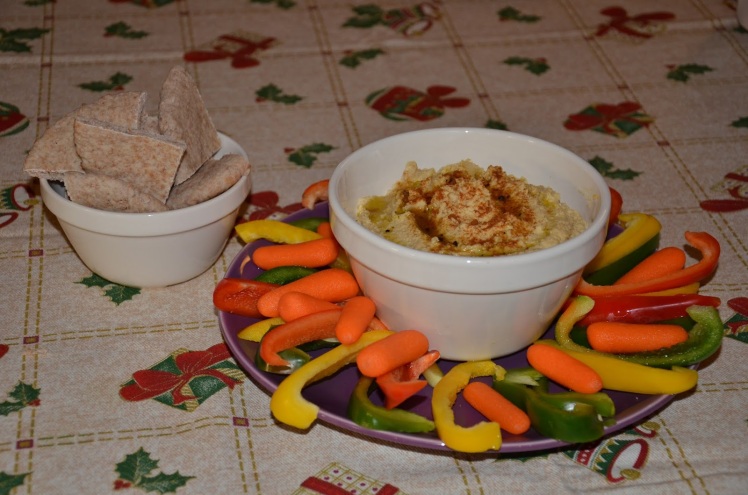
3. Hummus with crudités I love hummus. It’s so quick and easy to make; and so nourishing! Served not only with pitta bread but also with these crudités adds a touch of colour to your table. Adapted from Valerie Ferguson’s 500 Ways to Cook Vegetarian.

Ingredients:
  1. 400 gr. jar chick-peas.
  2. 2 tablespoons tahini.
  3. 2 tablespoons lemon juice.
  4. 1 garlic clove, crushed.
  5. Salt and ground black pepper.
  6. Olive oil and paprika, to garnish.

To serve: whole baby carrots (or carrots cut in strips), radishes, strips of green, yellow and red pepper. Pitta bread (I like cutting it in triangles).

Directions:

  1. Drain the chick-peas and put then in a blender or food processor. Add the tahini, lemon juice and garlic. Process to a smooth paste.
  2. Season the hummus with salt and pepper. Spoon it into a bowl and swirl the top with the back of a spoon. Trickle over a little olive oil and sprinkle with paprika.
  3. Arrange the crudités around the rim of a large plate.
  4. Add the triangles of pitta bread. Place the bowl of hummus in the centre.Serve at once and enjoy!

hummus-def

First course:

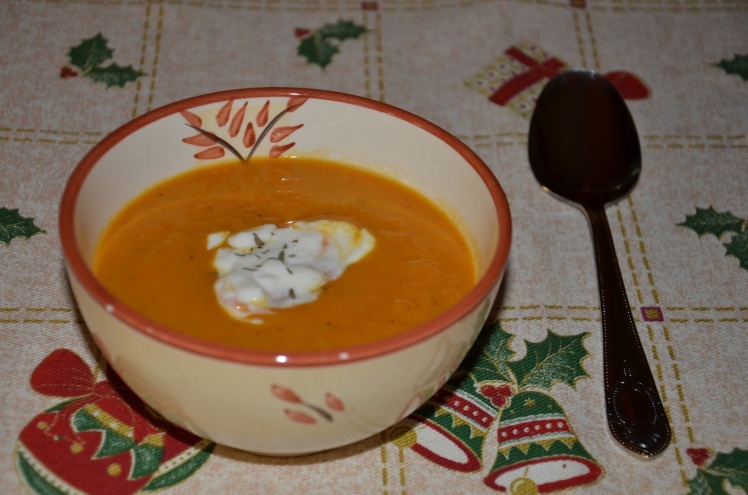
Roasted vegetables soup This is a thick soup, adapted from Valerie Ferguson’s 500 Ways to Cook Vegetarian.

Ingredients:
  1. 4 tablespoons olive oil.
  2. 1 kg pumpkin, peeled, seeded and cubed.
  3. 4 carrots, cut into thick rounds.
  4. 2 leeks, thickly sliced.
  5. 1 onion, quartered.
  6. 3 bay leaves.
  7. 4 fresh thyme springs, plus extra to garnish.
  8. 3 fresh rosemary sprigs.
  9. 1,2 litres vegetable stock.
  10. Salt and ground black pepper.
  11. Soy yogurt, to serve.

Directions:

  1. Preheat the oven to 200ºC. Put the olive oil into a large bowl. Add the vegetables and toss until well coated.
  2. Spread out the vegetables in a single layer on one large or two small baking sheets. Tuck the bay leaves and thyme and rosemary sprigs among the vegetables.
  3. Roast the vegetables for about 50 minutes, until tender, turning them occasionally to make sure that they brown evenly. Remove from the oven, discard the herbs and transfer the vegetables to a large saucepan.
  4. Pour the stock into the pan and bring to the boil. Lower the heat, season to taste with salt and pepper, then simmer for 10 minutes. Transfer the soup to a food processor or blender and process for a few minutes until thick and smooth.
  5. Return the soup to the pan and heat through. Season well. Serve in heated bowls, adding a dollop of soy yogurt to each portion. Garnish with the extra thyme sprigs.

crema

Main course:

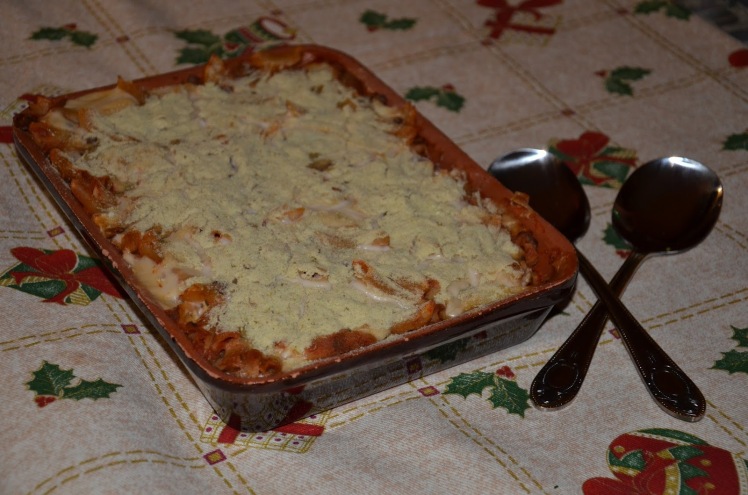
Baked pasta with lentils ragù Adapted from the book La Cucina Etica Facile, by Emanuela Barbero. It’s perfect even when reheated, so it can be prepared in advance, kept in the fridge and reheated just before eating.

Ingredients:
  1. 300 gr. short wholemeal pasta (penne rigate o maccheroni).
  2. 100 gr. brown lentils.
  3. 700 ml. tomato passata.
  4. 2 tablespoons olive oil.
  5. 2 shallots.
  6. 1 tablespoon chopped chives.
  7. Chili powder.
  8. 2 + 2 tablespoon fine breadcrumbs.
  9. Vegan white sauce (I am going to be lazy this time and use Amandine‘s ecological vegan rice bechamel).

Directions:

  1. Soak the lentils in plenty of cold water overnight. Boil and drain.
  2. Cook the pasta al dente in salted water.
  3. Pre-heat the oven to 200º C, but just 10-15 minutes before introducing the dish, otherwise it’s a waste of energy.
  4. Chop the shallots, heat the oil in a pan and sauté them at low heat until transparent. Add the lentils, the tomato sauce, the chives, and salt and chili powder to taste. Simmer for a few minutes until the liquid is reduced and you obtain a dense ragù.
  5. Drain the pasta, add it to the ragù, mixing all the ingredients and remove from heat.
  6. Oil a medium-sized oven dish and cover the base with 2 tablespoons of breadcrumbs.
  7. Add one layer of white sauce and make another layer with the ragù. Cover with the remaining white sauce, levelling the surface with the back of a spoon. Cover with the two remaining tablespoons of breadcrumbs.
  8. Cook in the oven for about 40 minutes, until the surface is golden.

pasta

Sweets and dessert:

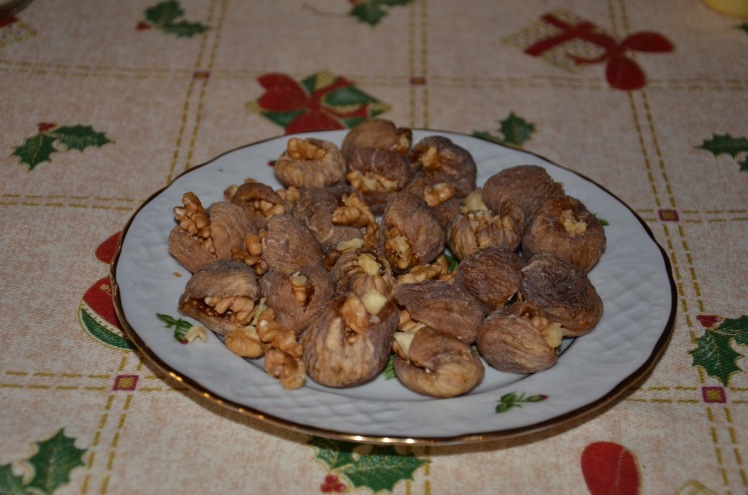
1. Poor man’s nougat My father is not a great fan of sweets, but he loves these dried figs filled with walnuts. There are many different recipes and some of them use almonds. I’m going to stick to the flavours of childhood and keep them simple. Just remove the stalk from the fig and make a cut wide enough to introduce a chunk of walnut. These figs are a small variety, from Torvizcón, in the Granadinian Alpujarras. Delicious!
turron
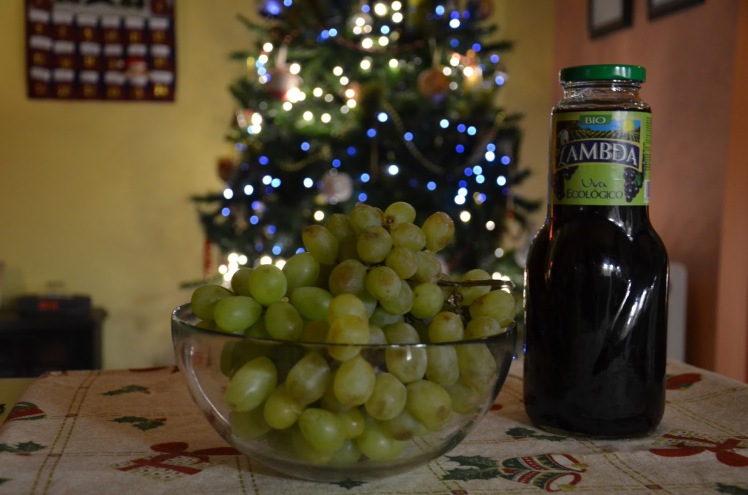
2. Grape Granita The recipe asks for white grape juice, but I love Lambda’s organic.
Ingredients:
  1. 1 cup water.
  2. 1/2 cup sugar.
  3. 1 kg.  grapes,rinsed, drained, stemmed and seeded.
  4. 1 1/2 cup grape juice.

Directions:

  1. Combine the water and sugar in a small saucepan; bring to a simmer over medium heat. Cook, stirring constantly, until the sugar is completely dissolved. Remove the pan from the heat and let cool at room temperature. Cover and refrigerate for at least 1 hour. Meanwhile, place a shallow metal container (the size of a cake pan) in the freezer to chill.
  2. Put the grapes in a blender or food processor and mix until smooth and pureed. Strain through a fine-meshed strainer into a large bowl, pressing down hard with the back of a large wooden spoon to extract all the liquids. Discard the solids (use them as fertilizer for your plants!).
  3. Add the grape juice and chilled sugar mixture to the strained puree; stir until well blended. Pour into the chilled metal pan.
  4. Place the pan in the freezer for 30 to 60 minutes, or until ice crystals form around the edges. Stir the ice crystals into the centre of the pan and return to the freezer. Repeat every 30 minutes, or until all of the liquid is crystallized but not frozen solid, about 3 hours.
  5. To serve, scoop the granita into chilled dessert bowls or goblets. (If the granita has become too hard, scrape it with a large metal spoon to break up the ice crystals). Serve at once. 

dsc_0307

Et voilà!

Author: Margarita Carretero González

Images: Margarita Carretero González

Editor: E.R.S.

Publicado en: Christmas Recipes Special, Recipes Etiquetado como: Christmas, Margarita Carretero González, menu, Navidad, Receta, Recipe, vegan

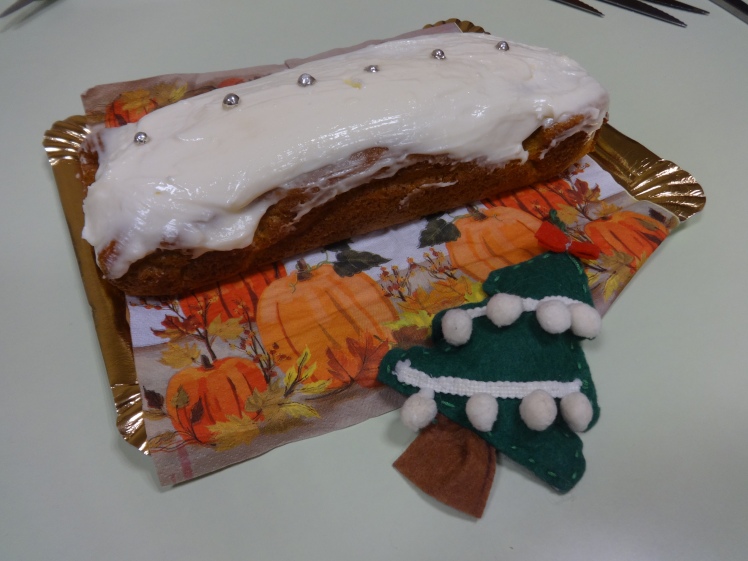
CANADA: Carrot Cake (Tarta de zanahoria) (en inglés)

17 diciembre, 2016 por Corpus Delicti Deja un comentario

Today’s first recipe takes us to Canada… Great, isn’t it? This recipe has been sent by Marta Falces, professor of the Department of English and German, and this is a typical Christmas dessert she has kindly shared with all of us.

Carrot cake

Ingredients:

  1. 1 cup of sugar.
  2. 1 cup of oil.
  3. 4 eggs.
  4. 2,5 tsp of baking soda.
  5. 1,5 tsp of cinnamon.
  6. 1,5 tsp of slat.
  7. 2 cups of flour.
  8. 4 cups of grated carrots.
  9. 1 cup of walnuts (optional).

Ingredients for the icing:

  1. 200 gr. Of cream cheese.
  2. 50 gr. Of butter.
  3. 2 tsp of vanilla sugar.
  4. 1 cup of icing sugar.

Directions:

  1. Mix all of the ingredients for the carrot cake, except the carrots and walnuts, together in a bowl until well combined. Stir in the carrots and walnuts.
  2. Spoon the mixture into the cake tin and bake for 55mts aprox. -180º C (after 30º mts turn the temperature down to 160ºC).
  3. For the icing, beat the cream cheese, icing sugar,butter and vanilla sugar together in a bowl until fluffy. Spread the icing over the top of the cake with a palette knife.

Enjoy!

Author: Marta Falces Sierra

Editor and image: E.R.S.

Publicado en: Christmas Recipes Special, Recipes Etiquetado como: cake, carrot cake, Christmas, Receta, Recipe, tarta

Preview! Christmas Recipes Special / Especial recetas de Navidad

16 diciembre, 2016 por Corpus Delicti Deja un comentario


christmas-recipes

Do you like any of these recipes?

Do you know all of them?

Do you need some ideas for Christmas?

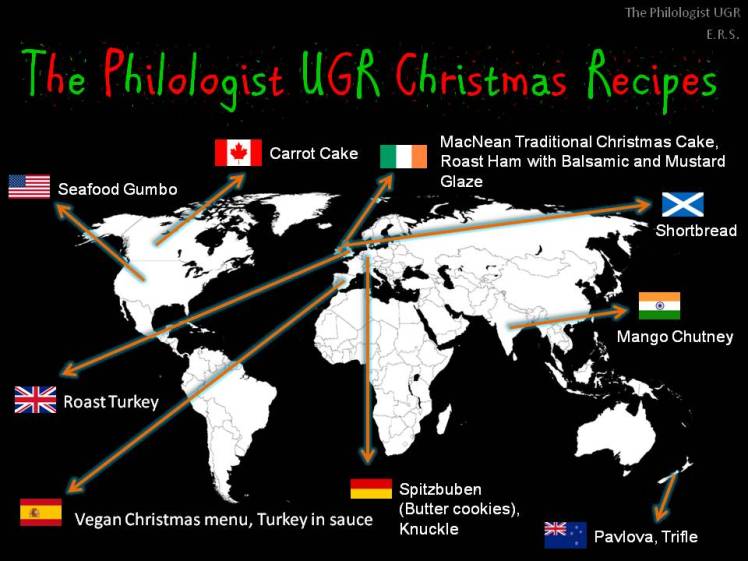
From December 17 and until December 24 you will find one or two of these recipes each day.

A whole week of Christmas recipes from English/German-speaking countries.

These recipes have been sent to us by both professors and students.

And they are not the totality of the recipes…

There is more to come…

Stay alert!

Editor and image: E.R.S.


Sources images:

Map: http://www.imagui.com/a/mapamundi-en-blanco-png-czEaoxddK

Flags: http://www.banderas-mundo.es/descargar

Scotland flag: https://pixabay.com/es/escocia-bandera-aspa-891914/

Publicado en: Christmas Recipes Special, Recipes Etiquetado como: Alemania, Canada, Christmas, EE.UU., Escocia, España, Especial Navidad, Germany, India, Ireland, Irlanda, Navidad, New Zealand, Nueva Zelanda, Receta, Recipe, Reino Unido, Scotland, Spain, UK, USA

  • « Ir a la página anterior
  • Página 1
  • Páginas intermedias omitidas …
  • Página 12
  • Página 13
  • Página 14
  • Página 15
  • Ir a la página siguiente »

Barra lateral principal

  • Correo electrónico
  • Facebook
  • Twitter
  • YouTube

SUSCRÍBETE A the philologist

Recibe notificaciones por email de las nuevas entradas en el blog

Categorías

  • Becas y Ayudas (7)
  • Events (64)
    • Agenda (32)
    • Cultural Events (50)
      • PREMIO POESÍA the philologist /UGR/ (1)
    • Lectures' Articles (6)
  • Off Campus (70)
    • Culture Vulture (4)
    • Let's go to the movies (15)
    • Music (6)
    • Recipes (16)
      • Christmas Recipes Special (16)
    • Suggested Readings (18)
    • TV Series (9)
  • Poesía (5)
  • Professors Beyond the Classroom (10)
    • Interviews (4)
    • La tertulia profesor/a – alumno/a (1)
    • News (4)
  • Sin categoría (18)
  • Students' World (36)
    • Alumni (6)
    • Erasmus Experiences (5)
    • Exams (1)
    • Improve your English (7)
    • TFG (3)
  • Uncategorized (7)
mayo 2026
L M X J V S D
 123
45678910
11121314151617
18192021222324
25262728293031
« Mar    

Follow us on Tweeter

Footer

Meta

  • Acceder
  • Feed de entradas
  • Feed de comentarios
  • WordPress.org

Universidad de Granada
blogsUgr
C.S.I.R.C. · Plataformas webs corporativas
Acceder

En BlogsUGR utilizamos cookies propias con finalidad técnica y para personalizar su experiencia de usuario. Algunos blogs de BlogsUGR pueden utilizar cookies de terceros para fines analíticos.


Puede aprender más sobre qué cookies utilizamos o desactivarlas en los .

the philologist /UGR/
Powered by  GDPR Cookie Compliance
Resumen de privacidad

BlogsUGR utiliza cookies propias para que podamos ofrecerte la mejor experiencia de usuario posible. La información de las cookies se almacena en tu navegador y realiza funciones tales como reconocerte cuando vuelves a BlogsUGR, haces algún comentario o seleccionas el idioma de un blog. Rechazar las cookies propias podría suponer la imposibilidad de acceder como usuario a BlogsUGR.

Algunos blogs de BlogsUGR utilizan cookies de terceros con fines analíticos para recabar estadísticas sobre la actividad del usuario en dicho blog y la actividad general del  mismo.

Cookies estrictamente necesarias

Las cookies estrictamente necesarias tiene que activarse siempre para que podamos guardar tus preferencias de ajustes de cookies.

Cookies de terceros

Algunos blogs de BlogsUGR utilizan Google Analytics para recopilar información anónima tal como el número de visitantes del sitio, o las páginas más populares.

Dejar esta cookie activa nos permite mejorar nuestra web.

También algunos blogs de BlogsUGR utilizan cookies de twitter.com que se utilizan para la visualización de esta red social en el blog.

Política de cookies

La presente política de cookies tiene por finalidad informarle de manera clara y precisa sobre las cookies que se utilizan en los blogs del servicio BlogsUGR de la Universidad de Granada.

¿Qué son las cookies?

Una cookie es un pequeño fragmento de texto que los sitios web que visita envían al navegador y que permite que el sitio web recuerde información sobre su visita, como su idioma preferido y otras opciones, con el fin de facilitar su próxima visita y hacer que el sitio le resulte más útil. Las cookies desempeñan un papel muy importante y contribuyen a tener una mejor experiencia de navegación para el usuario.

Tipos de cookies

Según quién sea la entidad que gestione el dominio desde dónde se envían las cookies y se traten los datos que se obtengan, se pueden distinguir dos tipos: cookies propias y cookies de terceros.

Existe también una segunda clasificación según el plazo de tiempo que permanecen almacenadas en el navegador del cliente, pudiendo tratarse de cookies de sesión o cookies persistentes.

Por último, existe otra clasificación con cinco tipos de cookies según la finalidad para la que se traten los datos obtenidos: cookies técnicas, cookies de personalización, cookies de análisis, cookies publicitarias y cookies de publicidad comportamental.

Para más información a este respecto puede consultar la Guía sobre el uso de las cookies de la Agencia Española de Protección de Datos.

Cookies utilizadas en la web

A continuación se identifican las cookies que están siendo utilizadas en este portal así como su tipología y función:

Todos los blogs de BlogsUGR utilizan cookies técnicas y propias, necesarias para la personalización de su experiencia de usuario y para el mantenimiento de sesión.

Algunos blogs de BlogsUGR pueden utilizar cookies de Twitter para personalizar la visualización de dicha red social en el blog.

Algunos blogs de BlogsUGR pueden utilizar Google Analytics, un servicio de analítica web desarrollada por Google, que permite la medición y análisis de la navegación en las páginas web. En su navegador podrá observar cookies de este servicio. Según la tipología anterior se trata de cookies  de terceros, de sesión y de análisis.

A través de esta analítica web se obtiene información relativa al número de usuarios que acceden a la web, el número de páginas vistas, la frecuencia y repetición de las visitas, su duración, el navegador utilizado, el operador que presta el servicio, el idioma, el terminal que utiliza y la ciudad a la que está asignada su dirección IP. Información que posibilita un mejor y más apropiado servicio por parte de este portal.

Para garantizar el anonimato, Google convertirá su información en anónima truncando la dirección IP antes de almacenarla, de forma que Google Analytics no se usa para localizar o recabar información personal identificable de los visitantes del sitio. Google solo podrá enviar la información recabada por Google Analytics a terceros cuanto esté legalmente obligado a ello. Con arreglo a las condiciones de prestación del servicio de Google Analytics, Google no asociará su dirección IP a ningún otro dato conservado por Google.